
Premier Adolescent IOP for Anxiety & OCD
Expert-Led Intensive Outpatient Care Serving Cincinnati, Dayton, and Indianapolis.Helping your teen get the support they need in a setting that's right for them.
The Anxiety Center's adolescent IOP program helps teens become themselves again, with the tools and support needed to live the rich life they deserve.
See if the Adolescent IOP is right for your teen
3 Cities
Cincinnati · DaytonIndianapolis
4.5 / 5.0
Google Reviews
PhD-Level
Doctoral CliniciansLeading Your Care
HIPAA Compliant
Insurance Accepted
What is an Intensive Outpatient Program (IOP)?
This is not a step backward — it is a strategic, precisely calibrated intervention for when weekly therapy is no longer enough and a residential setting would be far more than necessary.
An IOP provides a middle ground between traditional outpatient therapy and residential treatment. It allows your teen to receive intensive, daily therapeutic intervention while still living at home and maintaining their connection to their community.
Where IOP Fits In the Care Spectrum
Understanding the right level of support is the most important first step toward lasting recovery for your teen.
Traditional Weekly Therapy
Ideal for mild to moderate concerns — one hour per week.
Intensive Outpatient Program (IOP)
The deliberate middle ground — structured daily support while living at home.← The Anxiety Center
Residential / Inpatient Treatment
24/7 care — reserved for acute crises requiring full removal from home.
See If the Adolescent IOP Is Right for Your Teen
Complete the form below and a member of our clinical admissions team will reach out within one business day to discuss your teen's needs and determine the right fit.
What Does a Week in IOP Look Like?
Starting IOP can feel intimidating at first for your child. Many parents worry it will be too much for their child to handle or that the schedule will disrupt the family's routine. In reality, a week in IOP is designed to be structured, supportive, and manageable — helping your child build momentum while staying engaged in daily life.
3–5 Group Therapy Sessions
Group therapy is the core of IOP. Groups are clinician-led and organized by condition when appropriate, so teens are working alongside peers who truly understand what they're dealing with.
1 Individual (1:1) Session
This dedicated time is used to personalize goals, review progress, and connect what your teen is learning in group to their specific challenges and real-life triggers.
Skills Practice During Sessions
Groups focus on learning and practicing tools from CBT, DBT, ACT, and ERP — with an emphasis on applying them to real-life situations outside the clinic walls.
Condition-Specific Work
For anxiety or OCD, this may include guided ERP. For mood or trauma-related concerns, sessions focus on emotional regulation, coping skills, and long-term stability.
Optional Psychiatry & Treatments
Meet with a psychiatric provider for medication management or explore adjunctive treatments like TMS when clinically appropriate and beneficial.
Weekly Parent Check-In
Our providers check in with you directly to review progress, discuss homework assignments, and equip you with strategies to support your teen at home.
Space to keep living their life — school, work, and family commitments remain intact.
Is an IOP Right for My Teen?
Are not seeing sufficient progress in weekly therapy sessions
Skills are being discussed but not applied when real triggers occur at home.
Are struggling to attend school or participate in social activities
Anxiety is shrinking their world and creating dangerous avoidance patterns.
Are stepping down from an inpatient or residential program
Needing a structured "bridge" to ensure stability and prevent relapse.
The 9 behavioral patterns below are the most common warning signs that a teen's anxiety or OCD has escalated beyond what weekly therapy alone can address.
9 Signs the IOP Can Help
Intense Argumentativeness
Frequent, high-conflict power struggles over seemingly small requests that feel disproportionate to the situation.
Defiant Behavior
A sudden or escalating pattern of refusing to follow house rules or school expectations as a way to avoid anxiety-inducing situations.
Explosive Reactions
Uncontrollable outbursts or "meltdowns" when a ritual is interrupted or a fear is triggered beyond their capacity to manage.
Threatening Behavior
Verbal or physical aggression toward siblings or parents, often occurring when the teen feels "cornered" by their anxiety.
School Refusal
Frequent physical complaints (stomachaches, headaches) in the morning, leading to partial or total absence from school.
Social Withdrawal
Retreating from friend groups, quitting sports, or spending excessive time isolated in their room to avoid social judgment or triggers.
Academic Paralysis
Grades dropping due to an inability to start or finish tasks caused by perfectionism or OCD rituals consuming mental energy.
Therapy Stalled
They have become "too good" at therapy — learning the vocabulary of recovery but failing to apply it when triggers occur at home.
Increasing Ritualization
OCD compulsions (checking, cleaning, or mental rituals) are beginning to consume hours of their day, making normal functioning impossible.
Why The Anxiety Center?
Evidence-Based Excellence
Family-Centered Recovery
Regional Expertise
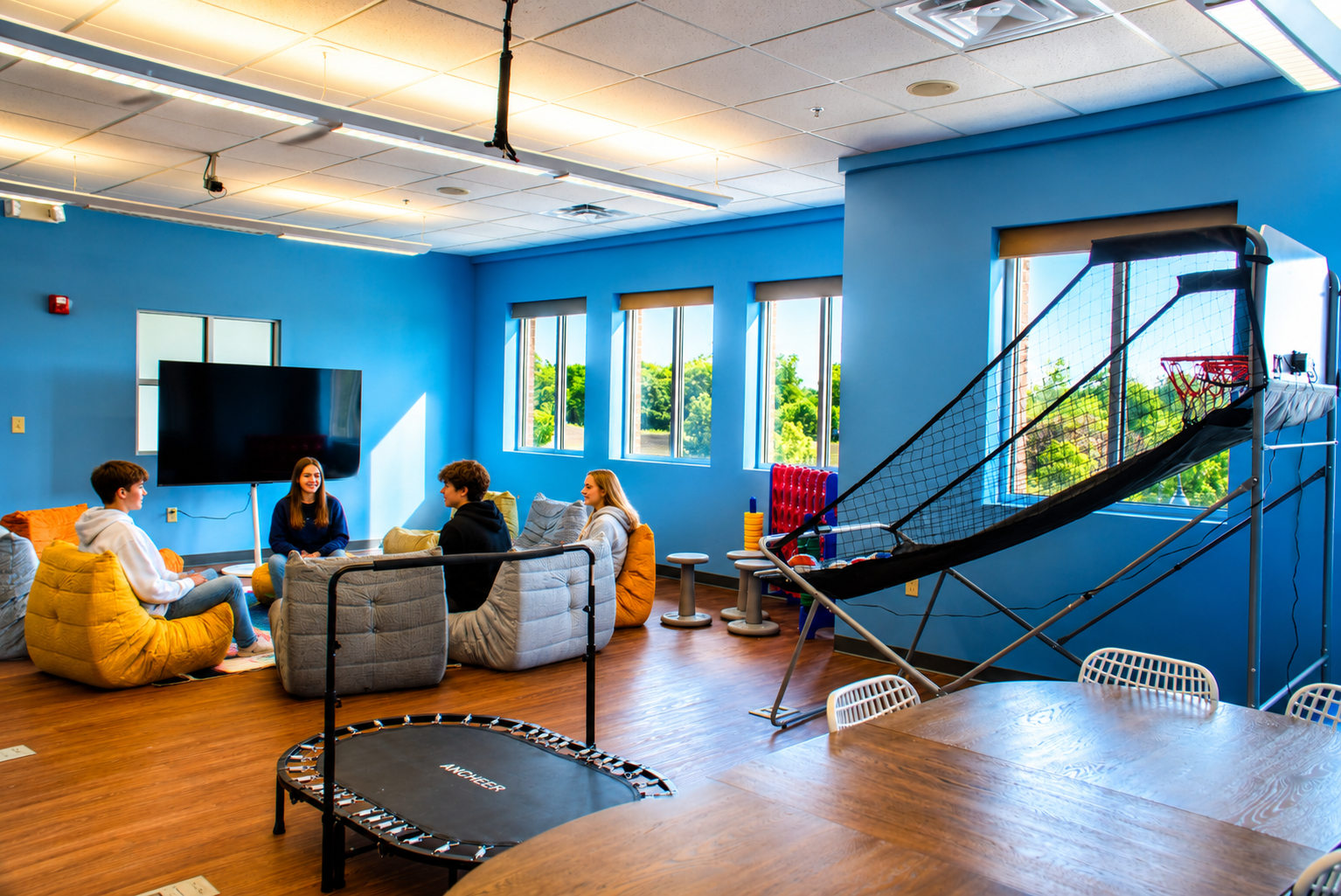
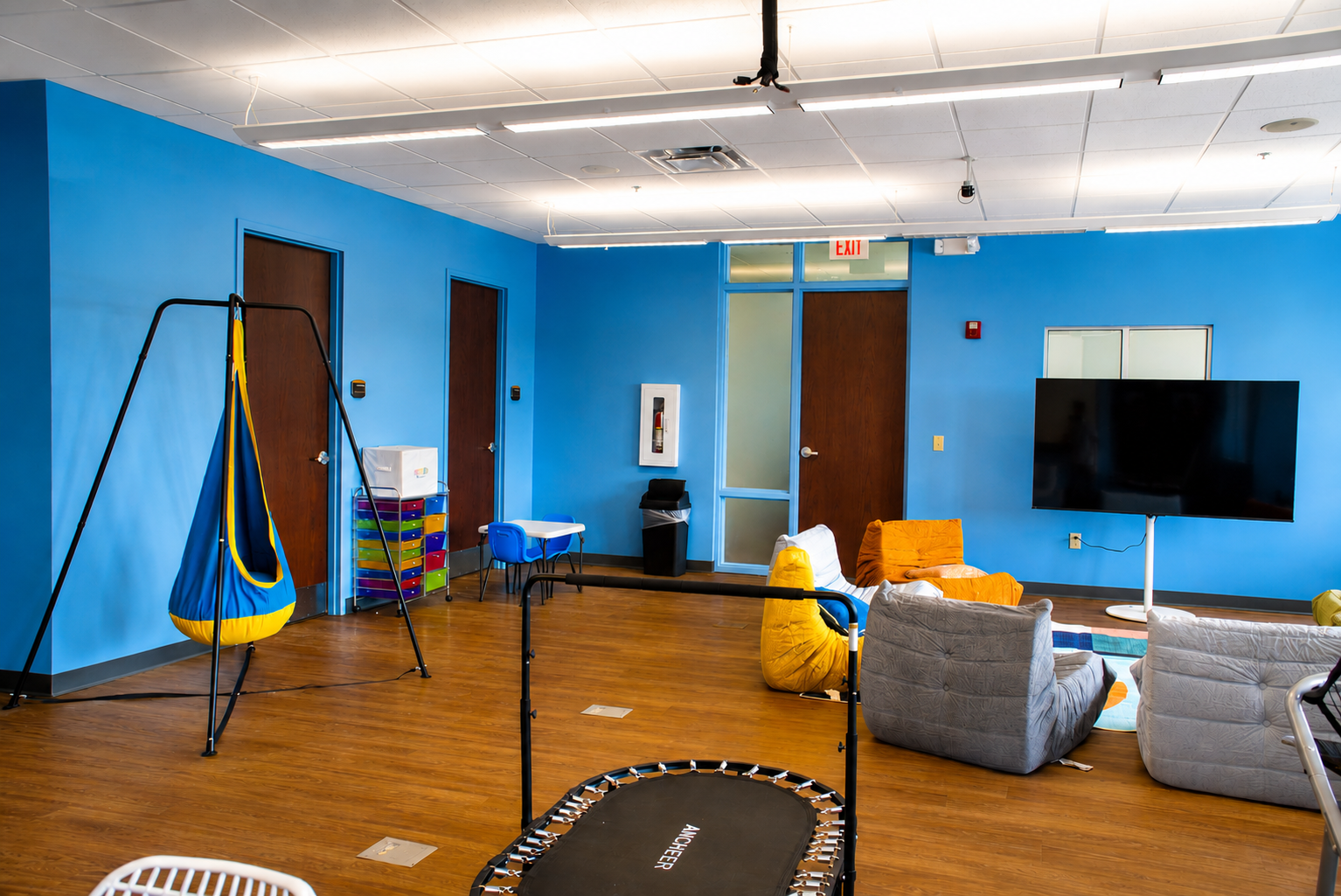
Natural Light & Warm Design — Spaces that feel like home, not a hospital
Small Group Sizes — Individualized attention in every session
Private Therapy Suites — Confidential one-on-one spaces
Curated Therapeutic Experience — Every detail designed with intention
Specialized Care for Your Teen's Specific Challenges
Our IOP is specifically designed for teens whose struggles fall within these core areas:
Teen Anxiety
Social anxiety, generalized anxiety (GAD), panic disorder, and school refusal.
Social Anxiety
GAD
Panic Disorder
School Refusal
Teen OCD
Specialized ERP (Exposure and Response Prevention) to address intrusive thoughts and compulsive behaviors.
Intrusive Thoughts
Compulsions
Specialized ERP
Co-occurring Challenges
Addressing the depression or perfectionism that often accompanies high-stakes anxiety.
Depression
Perfectionism
Co-occurring Conditions

How Does an IOP Fit In With Other Approaches?
An Intensive Outpatient Program serves as a vital "safety net", helping to prevent more intensive (and more costly) care options, such as hospitalization or inpatient residential treatment. By choosing a higher level of care now, you are taking a strategic step to prevent the need for more intensive, disruptive interventions in the future.
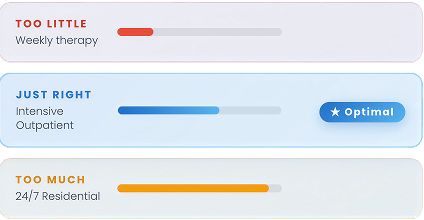
The Goldilocks Therapy Problem
Most mental health care is either "too little" (one hour of therapy a week) or "too much" (24/7 hospitalization). The IOP provides the sophisticated middle ground required to stabilize a teen while they remain in their natural environment.
A Multidisciplinary Team Dedicated to Your Teen
Our program is led by doctoral-level psychologists, independently licensed specialists, ERP and CBT experts, and psychiatric nurse practitioners — all under one roof, all working together on your teen's specific treatment plan.
PhD
Doctoral-Level Clinicians
ERP
Gold-Standard OCD Treatment
3
Locations Across the Region
IOP Recovery Patient Stories
Hear directly from the families whose lives have been transformed through expert, compassionate care at The Anxiety Center.
How Does an IOP Fit In With Other Approaches?
The Goldilocks Therapy Problem
Most mental health care is either "too little" (one hour of therapy a week) or "too much" (24/7 hospitalization). The IOP provides the sophisticated middle ground required to stabilize a teen while they remain in their natural environment.
Interrupting the Downward Spiral
Anxiety and OCD are progressive. Left untreated, symptoms often lead to total school refusal, self-harm, or severe depression. IOP interrupts this trajectory by providing daily, expert-level intervention.
Stability Without Displacement
Hospitalization or residential treatment removes a teen from their family, school, and support systems. This disruption can often cause its own set of traumas. IOP allows your teen to heal while sleeping in their own bed and maintaining their academic connections.
Real-World Resilience
In an inpatient setting, a teen is in an artificial clinical bubble. In our IOP, they learn to face their triggers in real-time in their real-world environment. This creates functional stability that lasts.
Frequently Asked Questions
Everything you need to know about getting started with the Adolescent IOP at The Anxiety Center.
Yes, we work with many major insurance providers to help maximize your benefits. Our admissions team can assist with benefits verification to ensure you understand your coverage before beginning the program. We are committed to making this level of elite care as accessible as possible.
The process begins with a comprehensive clinical assessment to ensure the IOP is the appropriate level of care for your teen. This evaluation is thorough and designed to create a personalized treatment roadmap — not to be a barrier to care. Complete the form below to schedule your free 15-minute consultation and begin the process today.
We have adolescent IOP programs available in Cincinnati, Dayton, and Indianapolis with modern, accessible facilities designed to enhance your teen's experience and growth. Our spaces are deliberately warm and welcoming, far removed from clinical environments.
Protecting Their Future
The goal of early, intensive intervention is to ensure that a temporary struggle doesn't become a permanent setback. By providing the tools to manage high-stakes anxiety and OCD now, we help prevent the long-term academic and social gaps that often follow more restrictive placements.