
Built for teenagers. Scheduled around school.
Our adolescent IOP runs after school, so teenagers can keep attending classes while getting the intensive support they need. It pairs structured Exposure and Response Prevention with explicitly taught emotion regulation, so fear and emotional dysregulation are addressed together, not in sequence.
After school
Per week, flexibly scheduled
Exposure every day
Paired with CBT and DBT skills
9–15 hrs / week
Cincinnati · Dayton · Indianapolis
Family therapy and individual therapy scheduled separately.

What makes this program different
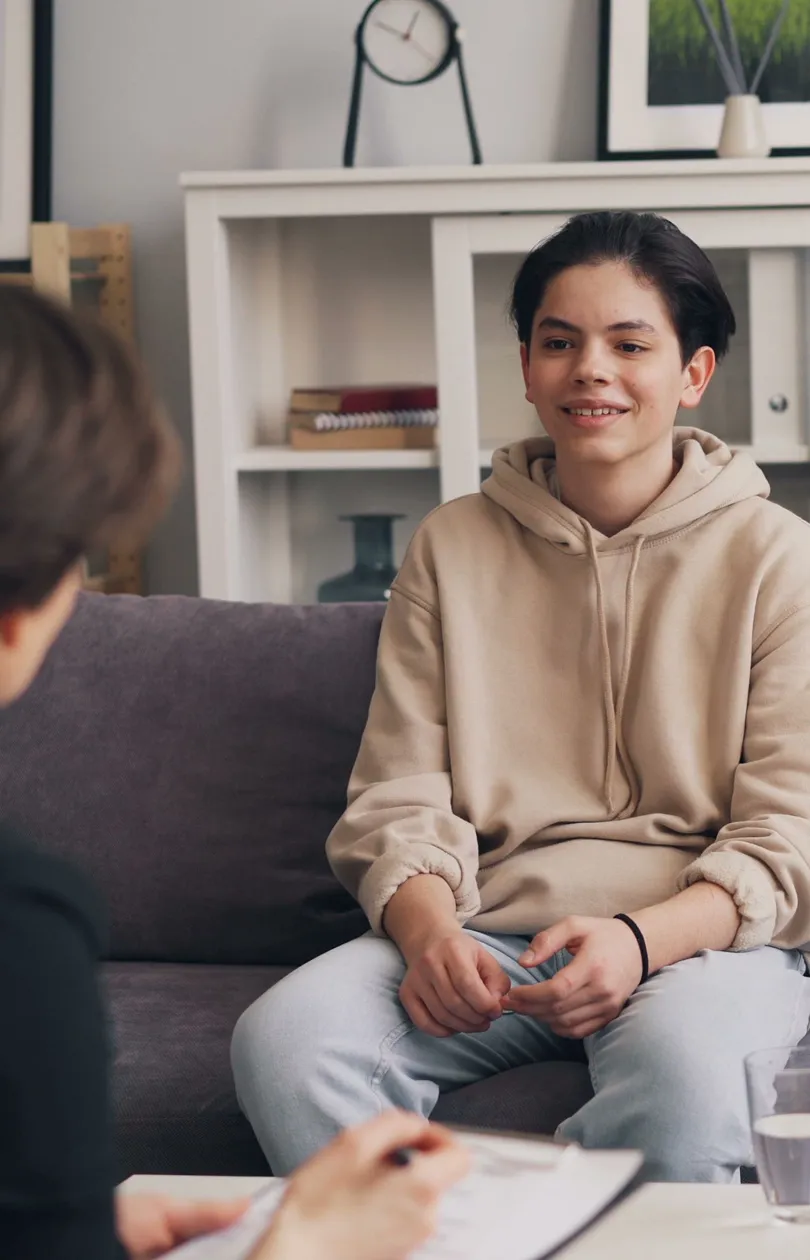
Emotion regulation taught before the fear is faced
Exposure therapy is the most effective treatment we have for anxiety and OCD, but for a teenager, being asked to face fear without the skills to handle it feels like the deep end with no lesson first. So we teach emotion regulation before and alongside every exposure. DBT skills aren't an add-on; they're the scaffolding that makes the work possible.

Treatment that doesn't cost them their education
School refusal is one of the most common things we see, and pulling a teen out of school for treatment can deepen the very avoidance driving it. We run 3:30 to 6:30 PM, Monday through Friday, so they go to school in the morning and come to treatment after. The schedule treats going to school as the default, not the goal.

Meeting teenagers where they are
Teens don't walk in ready to talk, and we don't pretend they will. Every session opens with a mental stretch: 30 minutes of art, movement, or a few quiet, mindful minutes, a space to settle in and just be a teenager before the work starts. It's not filler. It's how trust gets built, and trust comes before commitment.
Every week includes all of this
The adolescent program is built on the same clinical foundation as the adult tracks (exposure-based treatment, structured skills work, individual therapy), with the developmental and family context that makes treatment effective for teenagers specifically.
Daily group sessions (3 hrs)
Every session day runs 3:30–6:30 PM: a 30-minute mental stretch to settle in, then CBT for Anxiety (Mon/Wed/Fri) or DBT Skills (Tue/Thu), a 75-minute Direct Exposure Practice block, and a 15-minute closing circle.
Individual therapy (weekly)
Weekly 1:1 sessions with the adolescent's dedicated therapist, the same clinician throughout the program. Reviews progress on exposure hierarchies, addresses emotional content that arises in group, and coordinates with parents, school, and the prescribing psychiatrist. Therapists are trained in both Cognitive Behavioral Therapy with Exposure and Response Prevention and Dialectical Behavior Therapy for adolescents.
Medication management (as indicated)
Weekly psychiatric check-ins for adolescents where pharmacotherapy is part of the treatment plan. First-line medications for pediatric anxiety and OCD, namely SSRIs, are managed by clinicians with specific expertise in adolescent psychopharmacology, coordinated directly with the therapy team.
Family therapy (standard component)
Family involvement is not optional in the adolescent program. It is built into the treatment structure. Parents and caregivers are the primary environment in which adolescents practice skills and manage anxiety between sessions. Family sessions address accommodation patterns, teach parents DBT-informed communication strategies, and coordinate the home environment with the clinical plan.
Why exposure and emotion regulation belong together
Exposure is the most effective treatment we have for anxiety and OCD. For a teenager, it only works if they can stay in the room, so we teach the skills to do that first, then pair them with exposure every day
The most common reason teenagers quit exposure therapy isn't that it doesn't work. It's that the feelings get too big to stay with, so they leave. And every escape makes the avoidance stronger. So before we ask a teen to face anything, we make sure they have the skills to stay in the room.
Those skills come from DBT (distress tolerance, emotion regulation, and mindfulness), taught in dedicated groups twice a week. They aren't a parallel track. They're what makes each exposure session possible.
Exposure and Response Prevention for adolescents
ERP is the gold-standard treatment for OCD and anxiety. Each teen's plan is built with them and practiced where fear actually shows up (school, social settings, public spaces), alongside imaginal and interoceptive work. Community-based exposures are standard.
DBT skills for adolescents (DBT-A)
The teen adaptation of DBT keeps the skills that matter most at this age, in language that fits teenage life. Its Walking the Middle Path module covers the real tensions of being a teenager, like independence versus needing support, and how families respond. Parents join selected sessions.
Skills first, exposure the same day
Every session day pairs a skills block with exposure: CBT for Anxiety on Mon/Wed/Fri, DBT skills on Tue/Thu, each followed by Direct Exposure Practice. The skill gets taught, then used the same afternoon.
The mental stretch
Why every day starts slow
Every session opens with 30 minutes that isn't sitting and talking: art, movement, or a few quiet, mindful minutes. Call it a mental stretch before the exercise: a chance to arrive after a full school day, settle, and start talking before anyone's asked to do anything hard.
Teens need room to be teens. Trust comes before commitment, so we give them the space first, and the real work follows once they're ready for it.
Getting back to the classroom
School refusal isn't defiance, and it isn't a parenting failure. It's anxiety that has attached itself to the school building, and the way out is to keep going, with the right support around it.
It's the behavioral side of anxiety (separation, social, panic, or OCD) that's latched onto school. Staying home brings instant relief, and every morning it works, the fear that school is dangerous gets a little stronger.
Pulling a teen out of school for treatment quietly tells them attendance is optional, and takes away the exact practice they need. Our after-school schedule says the opposite: school in the morning, treatment after. The whole point is to make school possible again.
For teens who haven't been in weeks, we start with school-adjacent steps and work toward full reentry, coordinating directly with their school counselors. Getting back to class isn't a box to check at discharge. It's the plan from day one.

What school refusal usually looks like
Morning complaints (stomachaches, headaches, exhaustion) that resolve once it is too late to attend. Repeated partial attendance. Complete non-attendance for days, weeks, or months. Distress that is genuinely intense and not feigned. A family that has tried everything and is exhausted.
What drives it
Most commonly: social anxiety about peer evaluation or performance, separation anxiety from a parent or home, panic disorder with anticipatory fear of physical symptoms, OCD intrusions that occur in school settings, or a history of bullying or social failure that has conditioned the school environment as a threat.
How we address it
Graduated exposure hierarchy starting from school-adjacent targets. Coordination with the school's counseling and administrative team. Parent coaching on response to morning refusal behavior. DBT skills for managing the morning transition. And an after-school schedule that treats attendance as the default from the first day of the program.
What a week looks like
Hover any session to learn what happens in that group. The program runs Monday through Friday, 3:30–6:30 PM. CBT for Anxiety is taught Monday, Wednesday, and Friday; DBT skills Tuesday and Thursday; exposure practice runs every day.
If your teenager is struggling with any of this, we can help
The presentations we see most often in adolescents are not simple. Many teenagers arrive with anxiety and depression at the same time, or OCD that has led to school refusal, or emotional dysregulation that makes exposure work feel impossible without explicit skill-building first. This program was designed for exactly that complexity.
- Persistent worry that is difficult to control and feels impossible to turn off
- Physical symptoms (racing heart, stomach pain, headaches, muscle tension) that are real, not imagined
- Avoidance of situations, people, or environments to manage overwhelming fear
- Difficulty functioning at school, with friends, or at home due to anxiety
- Anticipatory dread before school, social events, or performance situations
ERP is the gold-standard treatment for OCD with strong meta-analytic support. Our ERP protocol is individually hierarchized and delivered across all relevant modalities: in vivo contact with feared objects and situations in real community settings, imaginal exposures for feared thoughts and outcomes, and interoceptive exposures for somatic components. Response prevention is explicitly targeted for both overt behavioral compulsions and covert mental rituals.Exposure and Response Prevention is the most effective treatment for anxiety disorders across the board. Exposure hierarchies are individually designed for each teenager, built collaboratively with the adolescent, and include all three modalities: in vivo exposures in the real environments where fear occurs (classrooms, cafeterias, social gatherings), imaginal exposures for feared outcomes and thoughts, and interoceptive exposures for feared physical sensations. DBT skills are taught before and alongside every exposure session so the teenager has explicit tools for tolerating and regulating the distress that exposure produces.
- Consistent difficulty attending school, ranging from morning distress and reluctant attendance to complete non-attendance for days, weeks, or months
- Physical complaints in the morning (stomachaches, headaches, nausea) that frequently improve once school is no longer possible that day
- Distress that is genuine and intense, not manipulative
- A pattern of avoidance that worsens over time and becomes increasingly difficult to interrupt
- Parents who have tried everything and are exhausted and frightened
School refusal is treated as the primary exposure target, not a barrier to treatment. The after-school schedule preserves morning school attendance as the default. For adolescents not currently attending, the exposure hierarchy begins with school-adjacent targets (driving past school, entering an empty hallway) and moves systematically toward full reentry. The program coordinates directly with school counselors and administrators to build a graduated reentry plan connected to the exposure hierarchy. Family sessions address parental response to morning refusal behavior specifically.
- Thoughts of death, dying, or suicide, whether passive (wishing to be dead) or active (with a plan)
- Non-suicidal self-injury as a strategy for managing overwhelming emotion
- A history of psychiatric hospitalization that has not produced sustained improvement
- Escalating risk that standard outpatient therapy cannot safely contain
- Parents who are frightened and do not know how to respond
DBT was developed specifically for suicidal behavior and non-suicidal self-injury, and it has the strongest evidence base of any psychotherapy for reducing these behaviors in adolescents. The individual therapy component follows the DBT treatment hierarchy: life-threatening behaviors are addressed first, at every session, before any other content. DBT skills, particularly Distress Tolerance, which provides crisis survival tools for the moments of peak emotional intensity, are taught with direct application to suicidal and self-injurious urges. The program does not treat suicidal ideation as a contraindication to IOP. It treats it as the primary clinical target.
- Intrusive, unwanted thoughts, images, or impulses that feel disturbing and do not reflect who the teenager is
- Compulsive rituals, behavioral or mental, performed to reduce anxiety, even when the teenager knows they are not rational
- Reassurance-seeking from parents, friends, or teachers that never fully resolves the doubt
- Avoidance of situations that trigger obsessions, which progressively expands
- Contamination fears, harm obsessions, symmetry or order compulsions, intrusive sexual or violent thoughts
Exposure and Response Prevention is the gold-standard treatment for OCD at every age. For adolescents, the program explicitly addresses the family accommodation patterns (reassurance, ritual participation, avoidance facilitation) that maintain OCD as powerfully as the teenager's own compulsions. Response prevention is targeted for both overt behavioral compulsions and covert mental rituals. The DBT component provides the distress tolerance skills that make response prevention possible when the urge to perform a compulsion is at its peak.
- Persistent low mood, loss of interest in activities that previously brought pleasure, or both
- Fatigue, changes in sleep and appetite, difficulty concentrating
- Feelings of worthlessness, excessive guilt, or hopelessness
- Withdrawal from friends, family, and activities
- In some cases, thoughts of death or suicidal ideation
Depression in adolescents rarely presents alone. It most commonly co-occurs with anxiety, and the behavioral withdrawal it produces makes anxiety worse by deepening avoidance. The DBT component of the program addresses depression through Behavioral Activation (using DBT's Opposite Action skill to act against the pull of withdrawal) and Emotion Regulation skills that target the patterns of emotional avoidance sustaining low mood. For adolescents with active suicidal ideation, the individual therapy component uses a structured safety and treatment hierarchy that addresses suicidality as the first clinical priority.
- Intense emotional reactions that feel disproportionate to the situation
- Difficulty recovering from emotional experiences, with mood episodes that last hours or days
- Impulsive behavior during emotional peaks: outbursts, self-sabotage, storming out, sending regretted messages
- Chronic interpersonal conflict driven by emotional intensity
- A teenager who knows their reactions are “too much” and feels shame about it, but cannot change the pattern
Emotional dysregulation in adolescence is developmentally amplified. The teenage brain's emotional reactivity system is fully developed while the prefrontal regulation system is still maturing. DBT was specifically designed for this pattern: the skills curriculum targets the biological vulnerability to intense emotion and builds the specific regulation capacities that the prefrontal system is still developing. This is not about telling teenagers to calm down. It is about teaching them, explicitly and practically, how.
Your questions answered
Two reasons: one practical, one clinical. Practically: teenagers cannot maintain academic progress while missing school for treatment. The after-school schedule means they attend school in the morning and treatment in the afternoon. Clinically: for the large number of adolescents who struggle with school avoidance, pulling them out of school for treatment sends the wrong message. School attendance is not negotiable. The schedule is built to reflect that from the first day. For teenagers with active school refusal, maintaining the morning school expectation, even at reduced attendance, is itself part of the exposure plan.
Substantially involved. Family therapy is a standard component of the program, not an optional add-on. Research on adolescent anxiety and OCD consistently shows that family accommodation patterns (reassurance-giving, avoidance facilitation, ritual participation) maintain these conditions as powerfully as the teenager's own behavior. Parents are not the cause of anxiety or OCD, but they are often a significant part of the maintenance cycle, and addressing that cycle is essential to treatment. Family sessions teach parents how to respond to distress and avoidance behavior in ways that support recovery rather than unintentionally reinforcing it.
Most outpatient therapy for adolescent anxiety and OCD is not exposure-based. Therapists discuss feelings, build insight, and teach coping skills, but the core mechanism of change (systematic confrontation of feared stimuli with response prevention) is either absent or too infrequent to produce lasting change. One hour per week of exposure practice is rarely sufficient for moderate-to-severe presentations. IOP intensity (9–15 hours per week, with daily exposure practice) produces outcomes that weekly therapy cannot. If previous treatment also lacked explicit DBT skill-building before exposure, this program's pairing of the two is often the missing piece.
This is one of the most common things parents ask. First: willingness does not have to be complete for treatment to begin or to work. Many adolescents who are initially resistant engage meaningfully within the first week once they experience the program's structure and peer environment. Second: family therapy begins immediately and includes coaching on how to support attendance without engaging in coercive dynamics that escalate conflict. Third: for teenagers who are genuinely unable to attend in person due to school refusal or severe anxiety, we discuss a graduated engagement plan. Refusing treatment is itself an avoidance behavior, and we treat it as such.
We are in-network with most major commercial insurance plans and accept Medicaid in Ohio and Indiana. Our intake team verifies benefits before the first appointment. Adolescent IOP coverage varies by plan, and we will give you a clear picture of expected out-of-pocket costs before any commitment is made.
Every afternoon you'll start with 30 minutes of something that isn't sitting and talking. Depending on the day it might be art, movement, or a guided practice. After that, a skills session, either CBT on Monday, Wednesday, and Friday, or DBT on Tuesday and Thursday, and then a group where you practice facing something that makes you anxious. You'll end each session with a 15-minute check-in where everyone briefly says what they noticed and what they're taking away. Individual therapy happens once a week one-on-one. It's structured, but not rigid. You won't be asked to share things before you're ready.
Not in detail. The group format means you're working alongside other teenagers going through similar things, but you're not required to share the specifics of what you're anxious about or what your OCD targets are. Exposure practice is designed so each person works on their own hierarchy, so you'll know what you're doing, and so will the therapist, but you don't have to broadcast it to the group. Over time, most people find that knowing others are dealing with similar things makes the work feel less isolating.
The exposure work will make you uncomfortable, and that's the point. When you practice facing something that scares you and your anxiety eventually comes down, your brain learns that it can tolerate the fear. That's the mechanism of change. It doesn't feel good in the moment. But the research is very clear: avoidance keeps anxiety going and exposure reduces it. The skills you'll learn in the DBT sessions are there specifically to help you get through the hard moments without needing to escape. We don't ask you to face things before you have tools for it.
Tell your therapist. That's exactly what individual therapy is for, and it's the first thing they'll address with you, before anything else. This program has worked with a lot of teenagers who are dealing with those thoughts, and the Dialectical Behavior Therapy skills you'll learn here are specifically designed to help with the moments when emotion feels overwhelming. You won't be turned away for struggling. You'll be met where you are.
We are in-network with most major commercial insurance plans and accept Medicaid in Ohio and Indiana. Our intake team verifies benefits before the first appointment. Adolescent IOP coverage varies by plan, and we will give you a clear picture of expected out-of-pocket costs before any commitment is made.
See If the Adolescent IOP Is Right for Your Teen
Complete the form below and a member of our clinical admissions team will reach out within one business day to discuss your teen's needs and determine the right fit.
🔒 Your information is kept strictly confidential. We will never share your data with third parties.