
Built for kids 9 to 12. Designed for how children actually learn to be brave.
Anxiety-specific care for children whose worry has started to get in the way of school, home, and just being a kid.
When anxiety gets big enough, it stops looking like anxiety. It looks like a child who can't get to school, who melts down at home, who can't sit still or let a parent out of sight. Our children's IOP treats the anxiety underneath — with CBT built for this age and daily, hands-on practice at facing fears. It's structured to hold everything that travels with anxiety at this stage, too: the behavior, the low moods, the family exhaustion.
Ages 9–12
Parent education built in
Exposure every day
CBT-based, with daily exposure practice
Anxiety-specific
built for the challenges
that come with it
Session times are being finalized. We're setting a schedule that works for both kids and the families who bring them. The flow below is the shape of a day — exact days and times to follow.

What makes this program different
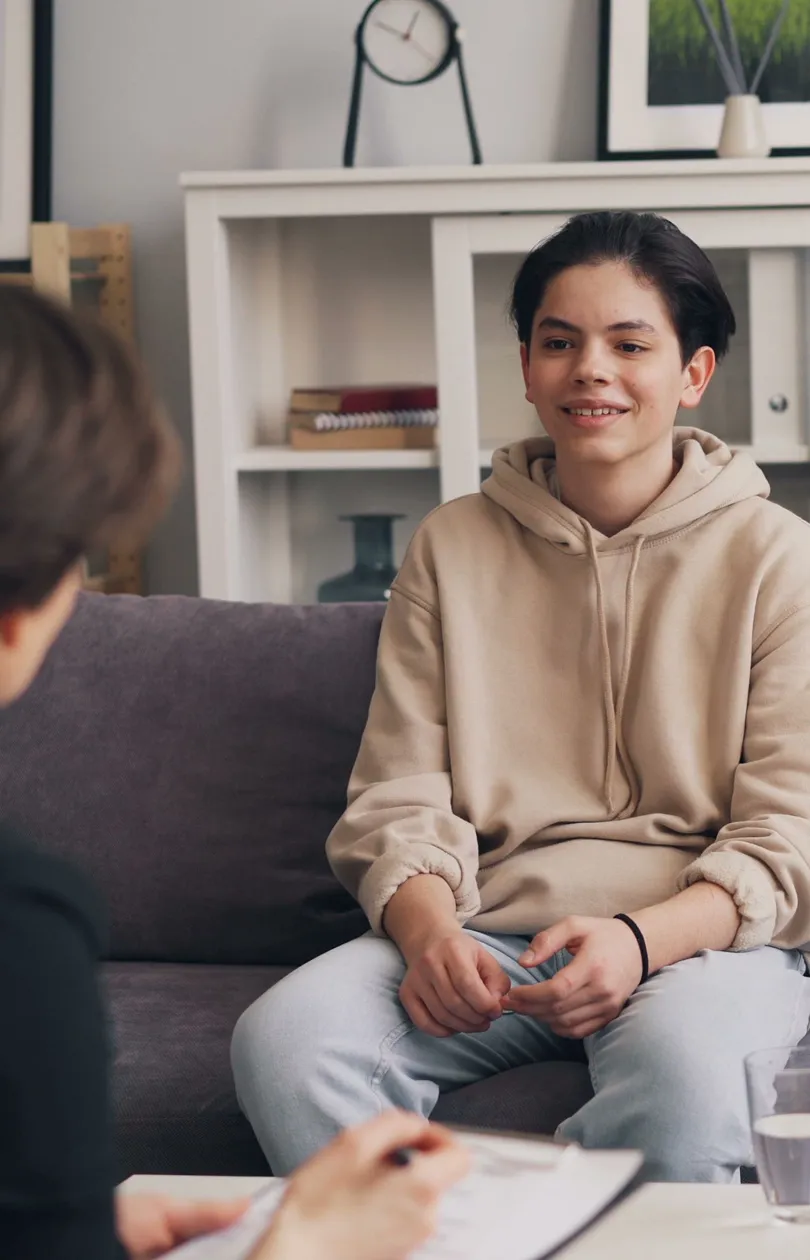
Kids get better at facing fears by facing them
Talking about worry doesn't shrink it. Facing it does. Exposure is the most effective tool we have for childhood anxiety: gradual, guided, brave practice at the very things anxiety says to avoid. It's the center of every day here. We don't ask a 9-year-old to be brave and hope for the best. We build the skill in small steps, cheer the wins, and let their own experience teach them the one lesson no reassurance ever could: I can handle this.

Kids are braver when the adults around them believe they can be
A child's anxiety lives at home as much as anywhere, and parents are often pulled into managing it in ways that quietly feed it. So we coach parents directly: how to communicate calmly, how to stop accommodating the fear, and how to express real confidence in what their child can do. Parent education isn't a side session. It's how the progress made here holds up on a Tuesday morning at home.

Treatment that looks a little like play — on purpose
Nine-to-twelve-year-olds don't heal by sitting in a chair talking for hours. They learn by doing. So the work happens through art, movement, and games that build real coping skills, alongside active practice at facing fears. It's engaging because it has to be. A child who's enjoying the room keeps showing up, and showing up is where the change comes from.
Every week includes all of this
Anxiety-specific and CBT-based, with the developmental fit and family involvement that make treatment actually work for a 9-to-12-year-old.
Daily group sessions
Each session day pairs a CBT skills group with hands-on practice: children learn how anxiety works, then actively practice facing fears the same day, with games and experiential activities that turn coping skills into things they've done, not just heard about.
Individual therapy (weekly)
Weekly one-on-one time with the child's dedicated therapist — the same clinician throughout. Sessions build each child's personal ladder of fears to work on, follow their progress, and keep parents and the school in the loop.
Medication management (as indicated)
For children where medication is part of the plan, psychiatric care is provided by clinicians with specific expertise in pediatric anxiety, coordinated directly with the therapy team.
Parent education & coaching (standard component)
Parent involvement is built into the program, not optional. Parents and caregivers are the environment where a child practices bravery between sessions, so we teach parents how to communicate well, respond to anxious behavior in ways that help rather than reinforce it, and show genuine confidence in their child's abilities.
Why bravery has to be practiced, not promised
CBT with exposure is the most effective treatment we have for childhood anxiety. It works because it gives a child real experience being brave — over and over, in small steps — until their own brain updates the story.
Cognitive behavioral therapy for children
CBT is the gold-standard treatment for childhood anxiety. Ours is taught in kid-sized language — how worry works, what the body does, and concrete tools to talk back to it — and it's the framework the whole week is built on.
Exposure — the brave practice
Each child works from their own ladder of fears, built with them, and practices facing those fears in gradual, guided steps. Practice happens where fear actually shows up, not just in a conversation about it. Facing fears is the point of the program, not a later phase of it.
Experiential learning & coping-skills games
Kids this age learn by doing. Art, movement, and games aren't breaks from the work — they're how coping skills get rehearsed until they're automatic, and how a child stays engaged enough to keep coming back.
Parent education
(Because kids can't do this without the adults at home)
We teach parents the two things that change a child's trajectory most: how to communicate in a way that keeps everyone calm, and how to express real, steady confidence in what their child can handle. That means learning to stop accommodating the fear — the reassurance, the rescuing, the letting-them-avoid — and replacing it with the message I know this is hard, and I know you can do hard things.
THE APPROACH
Breaking the Cycle of Avoidance
Anxiety tells a child that the only way to feel safe is to avoid. And every time avoidance "works," the fear gets a little stronger and the child's world gets a little smaller.
The way out is the opposite of what anxiety demands: to approach the feared thing, stay with it, and discover it was survivable after all. We make that possible by teaching CBT skills a 9-to-12-year-old can actually use, then having them practice the very things anxiety says to avoid, through structured exposures, games, and experiential activities.
And because a child's courage is borrowed from the adults around them, we coach parents to communicate calm and express confidence, so the bravery built here is backed up at home.
Getting back to the classroom
When a child can't get to school, it's almost never defiance and it's not a parenting failure. It's anxiety that has attached itself to the school building — and the way out is to keep going back, with the right support around it.
For a lot of children, staying home brings instant relief. And every morning it works, the fear that school is unsafe gets a little stronger. What looks like stubbornness in the morning is usually panic that hasn't found words yet. Getting back to class isn't something we hope happens by the end — it's the plan from day one.

What it usually looks like
- Morning stomachaches, headaches, or tears that ease once staying home is settled
- Reluctant or partial attendance
- Full non-attendance for days, weeks, or longer
- Distress that is genuinely intense, not "faked"
- A family that has tried everything and is worn out
What drives it
- Separation anxiety — fear of being away from a parent or home
- Social anxiety about peers, being called on, or being judged
- Panic or physical-symptom fears
- OCD triggers that show up at school
- A past experience — bullying, an accident, a hard day — that taught the brain school is a threat
How we address it — step by step
- Start from a step the child can actually succeed at
- Coordinate directly with the school
- Coach parents for the morning-refusal moment specifically
- Build coping skills for the transition into the school day
- Work up the ladder toward full return, from day one
If your child is struggling with any of this, we can help
The children we see rarely arrive with just one thing. Anxiety at this age often shows up tangled with big behaviors, low mood, or a child who's stopped going to school entirely. This program is anxiety-specific by design — and built to hold everything that comes with it.
- Constant worry that's hard to turn off, often about things that "might" happen
- Real physical symptoms — racing heart, stomachaches, headaches — with no medical cause
- Avoiding people, places, or activities to keep the worry down
- Trouble at school, with friends, or at home because anxiety is running the show
- Dread before school, birthday parties, sleepovers, or being called on
- The brain's alarm system fires at things that aren't actually dangerous
- Avoidance brings relief, which teaches the brain the fear was right
- Each avoided situation makes the next one feel bigger
CBT with exposure is the most effective treatment we have for childhood anxiety. Each child builds a personal ladder of feared situations with their therapist, then practices facing them in gradual, guided steps — through structured exposures, games, and real-world practice — while learning kid-sized CBT skills to handle the discomfort along the way.
- Intense distress at being apart from a parent, even briefly
- Refusing to sleep alone, go on playdates, or stay at school
- Constant "what if something happens to you" worries
- Following a parent room to room; trouble being dropped off anywhere
- Physical complaints that appear right at separation moments
- The fear attaches to being apart, and reunion brings powerful relief
- Drawn-out, anxious goodbyes accidentally confirm that apart = unsafe
- Each avoided separation makes the next one harder
Separation fears respond to the same core method — gradual, supported practice at being apart, paired with parent coaching. We teach parents how to make goodbyes calm and confident rather than drawn-out, so each separation becomes evidence to the child that they're safe and capable without a parent in the room.
- Morning complaints (stomachaches, headaches, nausea) that ease once staying home is decided
- Reluctant, partial, or fully stopped attendance
- Genuine, intense distress — not manipulation
- Avoidance that gets harder to interrupt the longer it goes on
- Exhausted, frightened parents who've tried everything
- Anxiety (separation, social, panic, or OCD) latches onto the school building
- Staying home relieves the fear and quietly reinforces it
- Time away makes returning feel more, not less, frightening
We treat getting back to school as the main target, not a barrier to treatment. For a child who's been out, the ladder starts with school-adjacent steps and moves toward full return, coordinated directly with the school. Parent sessions focus specifically on the morning refusal moment.
- Unwanted, upsetting thoughts, images, or urges that don't match who the child is
- Rituals — checking, washing, counting, redoing — to make the anxiety go away
- Endless reassurance-seeking that never quite settles the doubt
- Avoiding things that trigger the thoughts, with the list of "off-limits" things growing
- Fears about contamination, harm, symmetry, or "something bad happening"
- A distressing thought gets treated as a threat that must be neutralized
- The ritual brings brief relief, which locks the cycle in place
- Family reassurance and ritual participation keep it going
Exposure and Response Prevention is the gold-standard treatment for OCD at every age. For children, we also address the family accommodation — the reassurance and ritual participation — that keeps OCD going, coaching parents to step out of the loop while the child practices resisting compulsions with support.
- Meltdowns, outbursts, or shutdowns that seem out of proportion
- Anger, opposition, or "acting out" that's really anxiety with no other outlet
- Trouble at school or home that's landed the child in the principal's office or family conflict
- A child who feels awful about their reactions afterward but can't stop the pattern
- Behavior that's gotten worse as the underlying anxiety has gone unaddressed
- Anxiety a child can't yet name comes out sideways, as behavior
- Big reactions "work" to escape the feared thing, so they repeat
- Without tools, the only options feel like fight or flee
Big behaviors are usually the visible edge of anxiety a child can't yet name. We target the anxiety underneath with CBT and exposure, teach concrete coping skills through games and practice, and coach parents on responses that calm the moment instead of escalating it — so behavior improves because the child has better tools, not just tighter rules.
- Persistent sadness, irritability, or loss of interest in things they used to love
- Low energy, changes in sleep or appetite, trouble concentrating
- Pulling away from friends, family, and activities
- Talking down about themselves — "I'm bad at everything," "nobody likes me"
- Low mood that showed up alongside, or on top of, anxiety
- Anxiety-driven withdrawal removes the activities that lift mood
- Fewer wins and connections deepen the low feeling
- Low mood and anxiety feed each other in a loop
In children, low mood rarely travels alone — it most often rides with anxiety, and the withdrawal it causes makes the anxiety worse. We treat both: CBT skills that gently push back against withdrawal, engaging activities that rebuild momentum, and parent coaching to support the change at home.
Your questions answered
Yes. When anxiety is significant enough to affect school, friendships, or home life, this age is exactly when treatment works best — before avoidance becomes a way of life. Everything here is built for a 9-to-12-year-old: kid-sized CBT, learning through art and games, and brave practice broken into small, doable steps. It's intensive in dose, not in pressure.
Substantially — and that's by design. Parent education is a standard part of the program, not an add-on. Research on childhood anxiety consistently shows that how the adults at home respond — the reassurance, the rescuing, the accommodating — can keep anxiety going as powerfully as anything the child does. You're not the cause, but you're a big part of the solution. We'll coach you directly on how to communicate calmly and express confidence in what your child can handle.
Most weekly therapy for childhood anxiety isn't exposure-based — it's talking about feelings and building coping skills, without the core ingredient that actually shrinks anxiety: repeated, guided practice at facing the feared thing. One hour a week is rarely enough for a child who's struggling this much. The intensity here — daily practice, the same skills reinforced every day — produces change that weekly sessions often can't.
This is one of the most common worries, and it's a normal starting point. Willingness doesn't have to be complete for the program to begin or to work — many children who arrive resistant are engaged within the first week once they see it's more doing than talking, and that other kids are there too. Parent coaching starts immediately, including how to support attendance without it turning into a daily battle.
We are in-network with most major commercial insurance plans and accept Medicaid in states to confirm. Our intake team verifies your benefits before the first appointment and gives you a clear picture of any out-of-pocket cost before you commit to anything.
You'll start with something that isn't sitting and talking — maybe art, moving around, or a calm activity — so you can settle in after your day. Then a group where you learn how worry works and what to do about it, some real practice at facing something that feels scary (a little at a time, with help), and games that make the practice easier. At the end, everyone shares one thing they're proud of. You'll never be forced to talk about stuff before you're ready.
You'll practice facing things that make you nervous — but never all at once, and never alone. You and your therapist pick the steps together, starting with something small enough that you can do it, then working up. Every time you do a brave thing and see that you're okay, the worry gets a little smaller. And you learn tricks first, so you've always got tools before you try something hard.
Yes, there are other kids about your age going through similar stuff — and no, you don't have to tell the group all your private things. You work on your own stuff, and you and your therapist know what that is. Most kids find it's actually easier knowing they're not the only one.
Then you tell someone — that's exactly what your therapist and the grown-ups here are for. Nothing here is meant to feel easy the whole time, but it's not supposed to be overwhelming either. You learn coping skills for the hard moments, and you go at a pace that's stretchy but doable. Feeling nervous doesn't mean you can't do it. It usually means you're right where the brave practice happens.
Ready to take
the next step?
Our intake team can typically schedule an assessment within a few days.
Call us or submit the form, we'll take it from there.
Same-week assessments often available · In-network with most major insurance · Medicaid accepted