Exposure & Response Prevention
The Exposure and Response Prevention (ERP) Program at The Anxiety Center offers advanced clinical care to patients, promotes research in ERP, and educates healthcare professionals, students, and the public on the principles and practices of ERP.

Conditions We Treat
The Exposure and Response Prevention (ERP) Program at The Anxiety Center, directed by Nathan Fite, PhD, brings together highly experienced psychologists, therapists, and interns specializing in ERP for the treatment of psychiatric disorders. ERP has been shown to be a highly effective form of treatment for a broad range of psychiatric conditions. The Anxiety Center is dedicated to providing state-of-the-art treatment to patients in the ERP Program.
The ERP Program at The Anxiety Center offers clinical treatments and education for a variety of psychiatric disorders, including:
- Obsessive-Compulsive Disorder (OCD)
- Anxiety Disorders
- Depression
- Post-Traumatic Stress Disorder (PTSD)
- Panic Disorder
- Social Anxiety Disorder
- Specific Phobias
- Body Dysmorphic Disorder (BDD)
- Hoarding Disorder
Our Approach
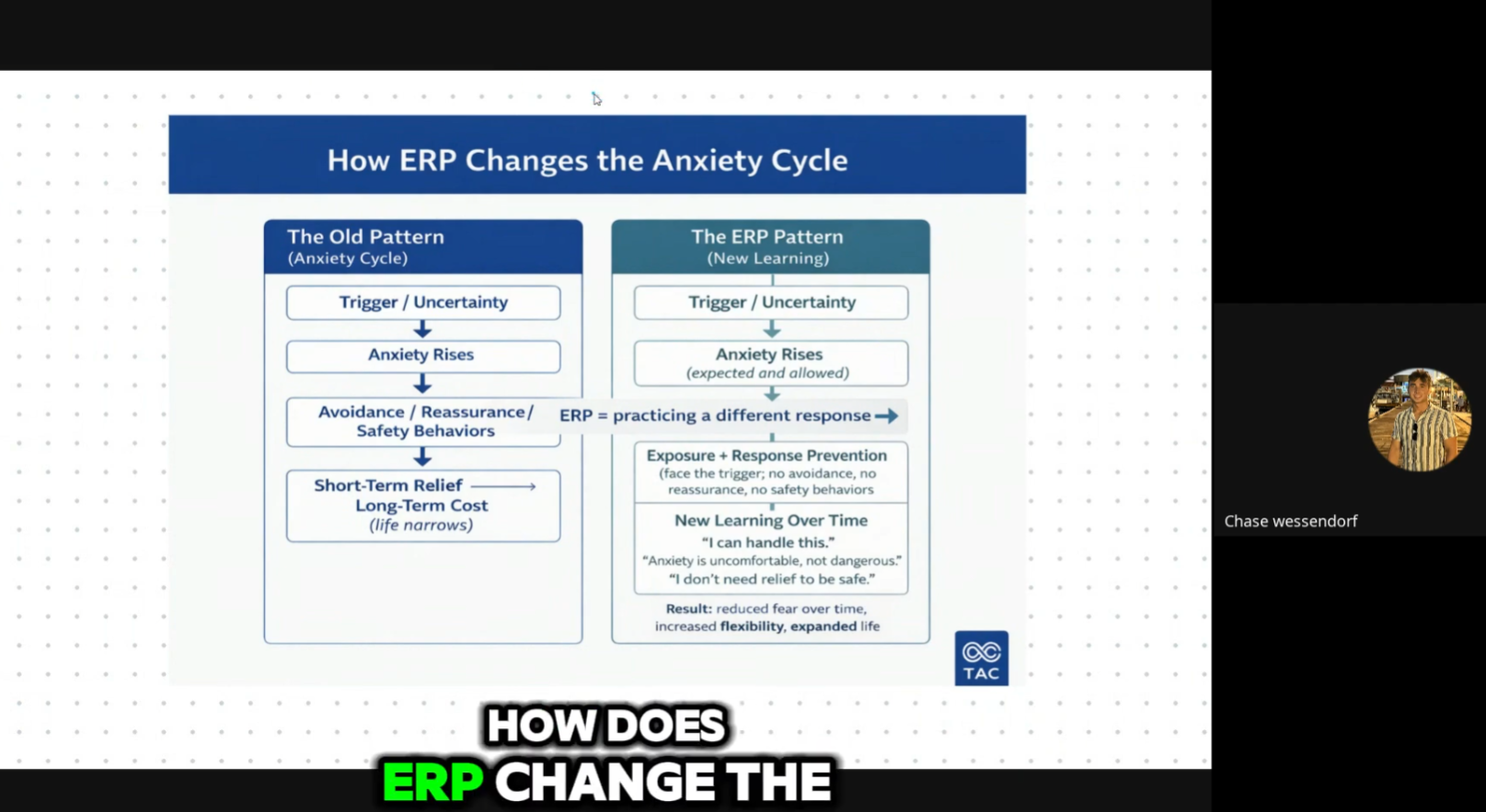
Exposure and Response Prevention (ERP) at The Anxiety Center is a structured, evidence-based approach that addresses a variety of psychiatric disorders. This therapy is designed to help patients understand and confront their fears and anxieties by preventing the compulsive responses that typically follow. A critical aspect of ERP is case conceptualization, which involves developing a detailed understanding of the patient's problems and the factors contributing to them. This personalized framework guides the selection and application of specific exposure and response prevention strategies to achieve the best outcomes.
Exposure Strategies
Exposure strategies in ERP focus on gradually confronting feared situations and reducing the compulsive behaviors that follow. Specific techniques include:
- Hierarchical Exposure: Patients create a list of feared situations ranked by intensity and gradually confront these situations starting from the least anxiety-provoking to the most.
- In Vivo Exposure: Patients face real-life situations that trigger their anxiety, such as touching a doorknob and refraining from washing hands.
- Imaginal Exposure: Patients vividly imagine feared scenarios that are difficult to confront in real life, such as catastrophic thoughts, and practice tolerating the anxiety they produce.
- Interoceptive Exposure: Patients are exposed to the physical sensations of anxiety, such as increased heart rate, to reduce fear of these sensations.
Behavioral Interventions
Derived from learning theory, behavioral interventions aim to change maladaptive behaviors and reduce the association between concerns and maladaptive responses. Key techniques include:
- Ritual Prevention: Patients refrain from performing ritualistic behaviors, such as checking locks or excessive cleaning, to break the cycle of compulsion and anxiety.
- Distress Tolerance: Patients use skills to tolerate the distress caused by not engaging in compulsive behaviors, such as deep breathing and mindfulness techniques.
- Cognitive Restructuring: Patients challenge and reframe negative thoughts associated with their compulsions, developing more balanced and constructive beliefs.
- Behavioral Activation: Patients engage in meaningful activities and routines to distract from compulsive urges and improve overall functioning.
ERP at The Anxiety Center also incorporates:
- Psychoeducation: Patients learn about the nature of OCD and anxiety disorders, understanding how ERP can help them overcome their symptoms.
- Relapse Prevention: Patients develop strategies to maintain progress and prevent relapse by recognizing early signs of returning symptoms and applying ERP skills.
At The Anxiety Center, our ERP Program integrates these advanced strategies to provide comprehensive and effective treatment for a wide range of psychiatric disorders and health concerns.
What to Expect at TAC
Exposure and Response Prevention (ERP) at The Anxiety Center is a highly structured, goal-oriented process that requires active participation from both the therapist and the patient. We emphasize that ERP is an active form of therapy—so much so that we tell our patients it’s not good therapy if you don’t break a sweat. Expect to be challenged and to be heard. Expect encouragement, but also expect to be provoked. Our goal is to instigate growth in each of our patients and maximize the benefits of treatment to help them achieve their goals and improve their quality of life.

The Collaborative Relationship
A successful ERP experience hinges on a collaborative relationship between the patient and therapist. This partnership involves:
- Understanding the Patient’s Issues: Both the therapist and the patient actively work to understand the patient’s specific problems and symptoms.
- Setting Goals: Together, they identify the objectives to be achieved through treatment.
- Working Towards Goals: The therapist and patient jointly develop strategies and interventions to reach these goals.
Assessment and Individualized Treatment Plan
Your ERP journey will begin with a detailed assessment of your problems and symptoms. Based on this assessment, your therapist will work with you to determine your treatment goals. This collaborative process leads to the development of a personalized treatment plan tailored to your specific needs.
Structured Sessions
Each ERP session is structured with a specific agenda, incorporating various techniques and concepts. This structured approach ensures that each session is focused and productive.
Motivation and Commitment
Significant improvement in ERP requires a high level of motivation and commitment from both the therapist and the patient. Key aspects include:
- Active Participation: Patients are expected to engage actively in sessions and in the therapeutic process.
- Feedback: Providing feedback—both positive and negative—during therapy sessions is crucial. This feedback helps the therapist adjust the pace, style, and content of future sessions to better meet your needs.
Homework Assignments
Patients are given homework assignments to complete outside of therapy sessions. These tasks are designed to reinforce the skills learned during sessions and to promote the application of these skills in real-life situations.
Expect to Work Hard
While ERP demands a great deal of work and energy, the potential outcomes are extraordinary. By fully engaging in the process, you can achieve significant improvements in your symptoms and overall quality of life. At The Anxiety Center, we are dedicated to instigating growth and maximizing the benefits of ERP to help our patients achieve their goals and lead healthier, more fulfilling lives.
Ready to take
the next step?
Our intake team can typically schedule an assessment within a few days.
Call us or submit the form, we'll take it from there.
Same-week assessments often available · In-network with most major insurance · Medicaid accepted