
How CBT Helps Reduce Anxiety: A Simple Diagram That Explains Why It Works

When anxiety feels overwhelming, it can be hard to understand what is actually happening or where to start.
Cognitive Behavioral Therapy (CBT) offers a simple, practical framework for understanding anxiety and changing how it impacts daily life.
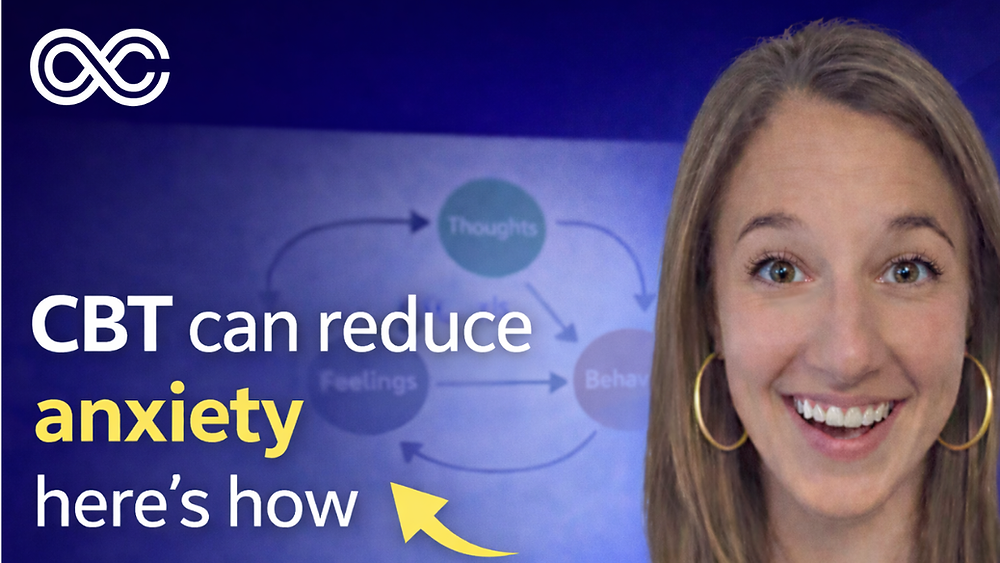
One of the most helpful tools used in CBT is a basic diagram that works for both adults and children.
It is simple, but very powerful.
Here is how it works and why it helps.
Every Emotion Has Three Parts
CBT begins with a core idea:
Every emotion is made up of three connected components:
- Thoughts
- Physical sensations
- Behaviors
Just like your body has different parts working together, every emotional experience does too.
Anxiety is not just a feeling. It is a full mind and body experience.
Example: Anxiety in a Social Situation
Imagine feeling anxious about attending a social event.
Thoughts
These thoughts might include:
- What if they judge me
- What if I say something wrong
- Everyone is watching me
These are anxious thoughts, and they often show up automatically.
Physical Sensations
Anxiety also shows up in the body:
- Increased heart rate
- Sweating
- Shortness of breath
- Dizziness
- Butterflies or discomfort in the stomach
These sensations are part of the nervous system’s threat response.
Behaviors
When anxiety shows up, behaviors usually follow:
- Avoiding the situation entirely
- Leaving early
- Only attending with a safe person
- Staying quiet or avoiding eye contact
These behaviors make sense. They are attempts to feel safer in the moment.
Why Anxiety Reinforces Itself
The key thing to understand is that thoughts, physical sensations, and behaviors are all connected.
- Anxious thoughts increase physical anxiety
- Physical anxiety increases the urge to avoid
- Avoidance reinforces anxious thoughts
This cycle can begin anywhere. Sometimes it starts with a thought.
Other times it begins with a physical sensation or an urge to avoid.
Over time, the cycle becomes stronger, and anxiety can start interfering more with daily life.
Why Stopping Thoughts or Feelings Is So Hard
Many people ask why they cannot simply stop worrying or calm their body down.
The reason is that we do not have much direct control over these processes.
- Thoughts often appear automatically
- Trying not to think about something usually makes it show up more
- Physical anxiety responses are driven by the brain’s alarm system
There are skills that help change how we relate to thoughts and how we calm the body.
CBT includes these tools.
However, they are not where people have the most control when anxiety is high.
Where CBT Focuses First: Behavior
Of the three components, behavior is the area where we have the most control, even when anxiety is present.
That is why CBT often begins with behavior.
Instead of avoiding feared situations, therapy focuses on gradually approaching them in new ways.
Examples include:
- Attending a social event without relying on a safe person
- Touching something anxiety labels as unsafe and resisting reassurance behaviors
- Staying in a situation long enough for anxiety to rise and fall naturally
This approach is known as Exposure and Response Prevention (ERP), a CBT based treatment commonly used for anxiety and OCD.
How Changing Behavior Changes the Brain
When behaviors change, learning occurs.
- You learn that you can tolerate discomfort
- Feared outcomes do not happen the way anxiety predicts
- The brain updates how it interprets threat
Over time, the brain begins to recognize that situations may be safer than expected.
As this learning happens:
- Anxious thoughts lose intensity
- Physical anxiety becomes less reactive
- Confidence increases naturally
The rest of the system begins to settle.
What CBT Is Really Aiming For
CBT does not aim to eliminate anxiety completely.
Instead, it helps people:
- Understand how anxiety works
- Interrupt patterns that maintain it
- Build confidence through real life experience
The goal is for anxiety to have less control and less influence, so life can expand rather than shrink.
A Supportive Reframe
Anxiety is not a personal failure.
It is a learned response that can be relearned.
With structure, support, and practice, CBT helps people move from avoiding life to engaging with it, even when anxiety is present.
That is where meaningful and lasting change begins.