From surviving to thriving with TMS
A non-invasive, medication-free treatment that helps restore healthy brain activity and improve depression over time.Transcranial Magnetic Stimulation (TMS) is designed for individuals ages 16+ in Cincinnati, Dayton, and Indianapolis who feel stuck despite therapy or medication. At The Anxiety Center, TMS is integrated with therapy and clinical support to help you make meaningful, lasting progress.
15+
Years FDA cleared
27.1%
Remission rate with TMS
How TMS Helps You Move Forward
If you've been doing the right things but still feel stuck, TMS may be the missing piece. It works by stimulating underactive areas of the brain involved in mood, helping your system respond again over time.
Targets the Root
Stimulates underactive brain regions responsible for mood, motivation, and emotional regulation.
Builds Over Time
Cumulative sessions strengthen neural pathways, creating sustainable, lasting improvements.
Works Alongside Your Care
Used together with therapy and/or medication — never as a replacement for your existing support.
Non-invasive and No sedation

What Is TMS?
Each session: under 30 minutes
No sedation, no recovery time. Drive yourself there and back.
Up to 5× per week
Structured to fit into daily life — many patients schedule sessions during lunch.
FDA-cleared since 2008
15+ years of clinical use — safe, validated, and widely adopted.
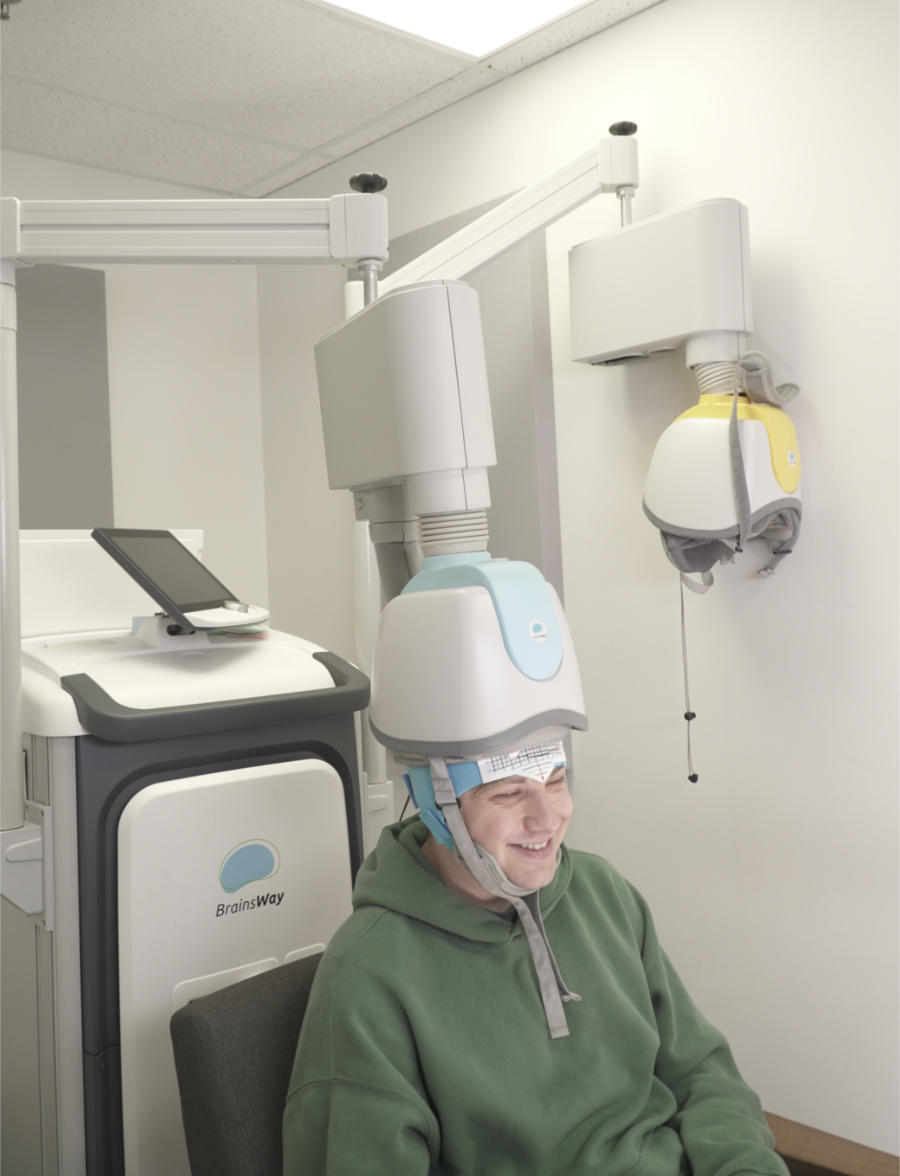

What does it actually feel like?
You'll hear and feel a gentle tapping on your scalp — similar to a light woodpecker sound. It doesn't hurt, and you stay fully awake and alert the entire time.

No antidepressant side effects
Unlike SSRIs, TMS doesn't cause weight gain, brain fog, fatigue, or sexual dysfunction — because it works directly on the brain, not through your bloodstream.

Not electroshock therapy (ECT)
TMS uses magnetic fields, not electrical current. No anesthesia, no seizures, no memory loss — it's a completely different and far gentler approach.

36
Sessions in a standard treatment protocol
The Brain Before & After TMS
Brain scans showing underactive mood-regulation areas in depression vs. restored activity following TMS treatment
Brain scan images courtesy of The NeuroClinic — TMS Therapy Explained
BRAIN BEFORE TMS
Before TMS
Underactive mood-regulation areas in depression
BRAIN AFTER TMS
After TMS
Restored, healthy brain activity following treatment
Take the First Step Toward Relief
Fill out the form below and our team will review your information and reach out shortly.
Evidence You Can Trust
FDA clearance and long-term clinical use mean TMS is not experimental. It reflects years of research, real-world results, and ongoing oversight.
Remission Rate
vs. 4.9% when switching medications
Patients with treatment-resistant depression who received TMS achieved remission at a rate more than 5× higher than those who simply switched
antidepressants.
American Journal of Psychiatry, 2024
Response Rate
vs. 14.6% with medication changes alone
Over a third of patients who received TMS experienced a meaningful clinical response — more than double the response rate seen with medication changes.
Dalhuisen, J. M., et al., 2024
FDA-Cleared Since
15+ years of clinical use & oversight
TMS has over 15 years of clinical use and is a well-established, evidence-based treatment — not a trend. FDA-cleared for both MDD and OCD.
U.S. Food and Drug Administration
TMS Patient Recovery Stories
From real patients at The Anxiety Center — Cincinnati, Dayton & Indianapolis.
Conditions We Commonly Treat with TMS
Depression
The primary FDA-cleared indication for TMS — significant clinical evidence for major depressive disorder.
OCD
FDA-cleared for obsessive-compulsive disorder — helping reduce intrusive thoughts and compulsive behaviors.
Anxiety
Targeting the neurological underpinnings of persistent anxiety to help reduce intensity and frequency.
PTSD
Emerging evidence supports TMS in modulating trauma-related brain activity and emotional processing.
Simple Steps to Get Started
We make the path to treatment clear, simple, and fully supported — from first call to first session.
Fill Out the Form
Schedule Your Free Consultation
Complete Evaluation & Insurance Verification
Begin Treatment
Why Patients Choose The Anxiety Center
Choosing TMS isn't just about the treatment — it's about the support, communication, and comfort you feel throughout the entire process.
Insurance navigation
We help navigate insurance and prior authorizations — reducing stress before you even begin.
Convenient locations
Serving Cincinnati, Dayton, and Indianapolis — making consistent care easier to maintain.
Clinically validated technology
Modern, FDA-cleared TMS equipment with standardized, evidence-based protocols.
Calm, comfortable environment
Private treatment rooms designed for comfort and focus — not a clinical, intimidating setting.
Integrated care model
TMS is delivered alongside therapy and clinical support — not in isolation.
Insurance Accepted
We accept most major insurance plans, including Medicaid. Our team will verify your benefits and guide you through coverage before starting treatment — no surprises.
Medicaid
Medicare
Anthem
Aetna
Humana
Cigna
United Healthcare
+ Most Major Plans
Your questions answered
Most people notice changes gradually. Some experience early improvements in sleep, energy, or mood within the first 10–15 sessions, while others see progress as sessions build over time. The full 36-session protocol is designed to create cumulative, lasting change — consistency is key.
Each session typically lasts less than 30 minutes. Many patients schedule sessions during a lunch break and return to their normal activities immediately after.
Yes. There is no sedation or recovery time required. You can drive yourself to and from every session and return to work, school, or daily activities immediately.
Yes. TMS is FDA-cleared and has been used in clinical practice for over 15 years. It is non-invasive and does not involve anesthesia, sedation, or systemic medications. Side effects are generally mild, temporary, and localized — most commonly mild scalp discomfort that resolves quickly.
No. TMS is often used alongside therapy and/or medication — not as a replacement. In many cases, TMS can enhance the effectiveness of existing treatments. Your care team will review your specific situation during your evaluation.
Ready to Move Forward?
If you've been feeling stuck and want to explore whether TMS can help, the next step is a simple, no-pressure conversation with our team.