
How Do I Know If I’m Depressed? 5 Signs That It’s More Than Just Sadness


We all go through rough patches.
A tough week, a bad breakup, stress at work. These things can leave anyone feeling low.
But sometimes, that heavy feeling doesn’t pass.
It lingers.
It grows.
And it starts to seep into every part of your life.
If you’re asking yourself, "Is this just a funk, or could it be depression?"
You’re not alone.
That uncertainty is incredibly common.
And the answer isn’t always obvious.
Here’s the hopeful news: In this guide are the clear signs to look for.
And recognizing them is the first step toward getting real support and starting to feel better.
Sign 1: It’s Not Just Sadness It’s Disconnection
Depression isn’t just about feeling sad.
For many people, the deeper struggle is a sense of emotional numbness or disconnection.
Things that used to matter suddenly feel distant or unimportant.
You might show up for work, make dinner, go through the motions, but feel like you're floating outside of your own life.
This kind of emotional disconnection is one of the most often missed signs of depression.
"Clients often say they don’t feel sad — they just feel nothing. That emotional flatness is one of the clearest signs we’re looking at depression, not just a rough patch."
— Alex, TAC Clinician (Cincinnati)
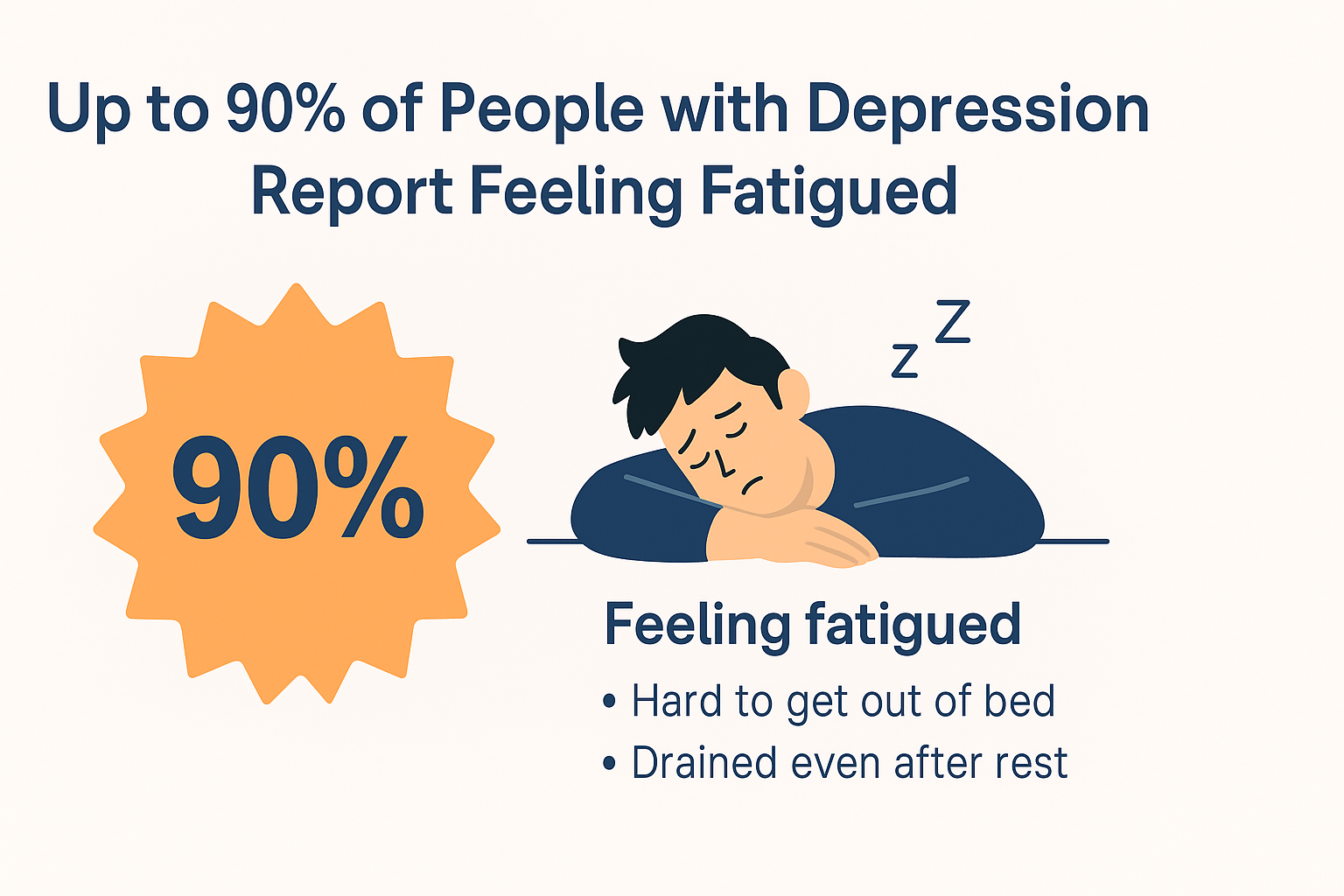
Sign 2: You’re Exhausted, Even After Rest
This isn’t regular tiredness.
It’s a heavy, bone-deep fatigue that doesn’t go away with sleep.
You might wake up already drained.
The idea of doing even basic tasks feels overwhelming.
Fatigue is one of the most common and debilitating symptoms of depression.
It’s not just mental, it’s physical, too.
(PMC)
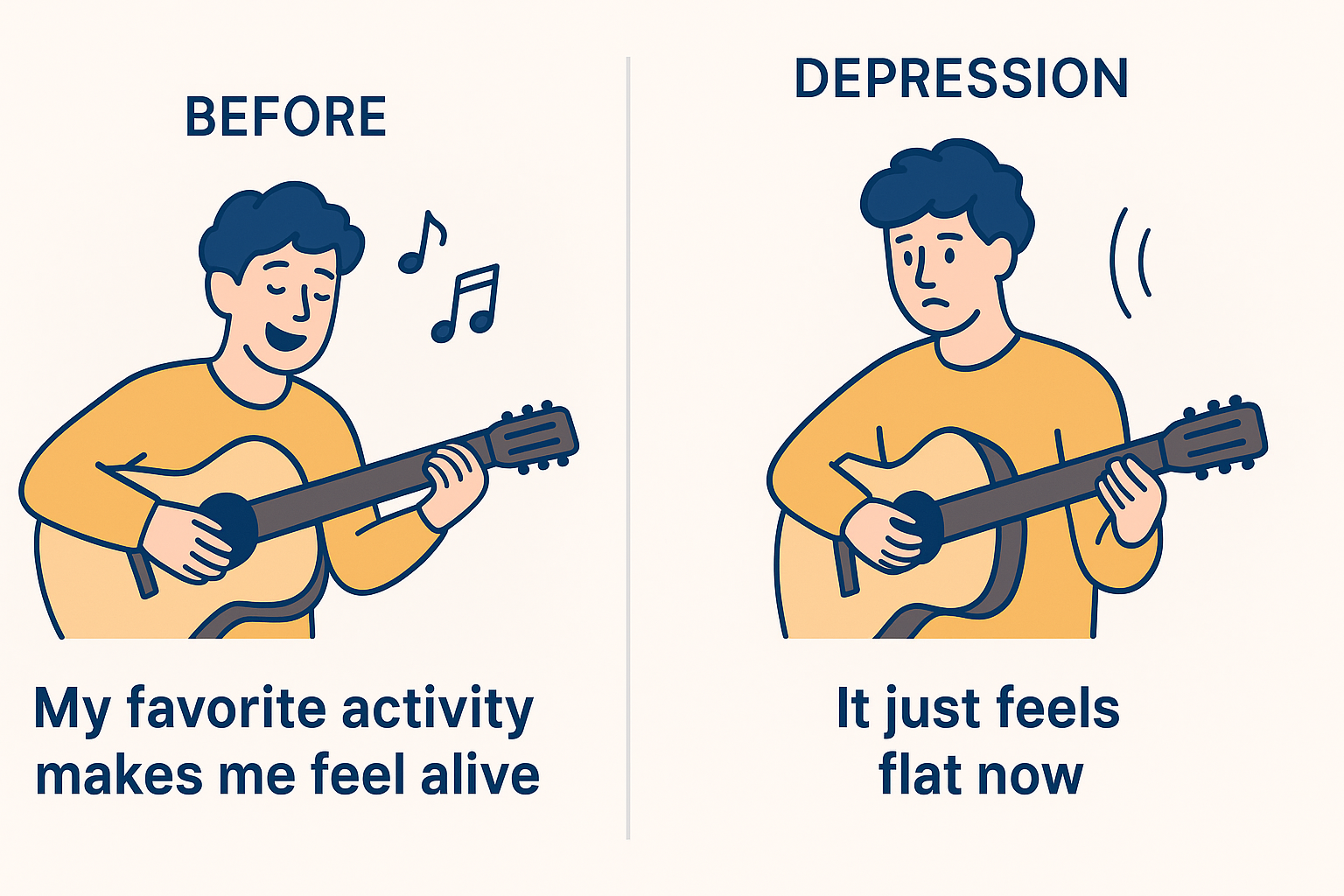
Sign 3: Things You Used to Love Feel... Flat
Hobbies, friends, music, and food that used to spark joy, now feel like nothing.
You may try to engage, but it all feels dull or pointless.
This loss of interest or pleasure is called anhedonia, and it’s a hallmark of depression.
It signals a shift that goes beyond normal stress or sadness.
Around 70% of people with MDD experience clinically significant anhedonia, making it a core symptom (BMC Psychiatry).
One client told us she used to love hiking but now she’d stand at the trailhead and feel… nothing.
That shift wasn’t laziness.
It was depression.
Sign 4: You Feel Guilty or Worthless Without a Clear Reason
Many people with depression describe a constant, nagging sense of failure.
You might feel like you’re letting everyone down.
Or like you don’t deserve support.
These feelings often don’t match reality, but they still feel very real.
And they’re a major red flag for depression.
Feelings of worthlessness or excessive guilt affect about 85% of people with major depressive disorder, according to the DSM-5-TR.
Sign 5: You Wonder If Life Will Ever Feel Normal Again
When you're in it, depression can feel endless.
You might start thinking, "What if I never feel like myself again?"
That hopelessness is a signal, too.
It doesn’t mean you’re broken.
It means your brain is stuck in survival mode.
And with the right support, you can get unstuck.
Untreated depression increases the risk of chronic episodes and suicidality, but early treatment significantly reduces long-term severity and recurrence (NIMH, 2023).
Clinician Insight: What We Look for in an Assessment
"One early sign I educate clients about is apathy, when you find yourself going through the motions of life without really feeling connected to it."
— Michael, TAC Clinician (Cincinnati)

At The Anxiety Center, we don’t just look for one symptom.
We look at the full picture.
That’s your mood, energy, sleep, thought patterns, and daily functioning.
If something feels off, we’re here to help you figure it out.
Depression affects more than 280 million people globally, making it one of the most common and disabling mental health conditions (WHO, 2023).
Studies show that early recognition and treatment of depression significantly improve recovery and reduce the risk of future episodes (ScienceDirect, Nature).
The sooner you start, the better the outcomes.
Want to know what comes next?
You don’t have to keep figuring this out alone.
Our team is here to listen, guide you gently, and help you find the support that actually fits, starting with a free, 15-minute consultation
Just 4 small steps: 📄 Fill out a short form → ☎️ Speak with a human → 🎯 Choose your therapy method → 💬 Schedule your first session.
At our Cincinnati office, we’ve helped clients facing some of the most intense symptoms start to reclaim joy and momentum.
We also work with individuals across Dayton and Indianapolis who are navigating this same question: Is this just a rough patch… or is it something deeper?
A client of ours had been homebound for years with severe OCD and depression.
Eight weeks into our IOP and exposure work, combined with ketamine and meds, she took a trip out west.
She vomited on the trip, which had been her worst fear, but kept going.
She hiked.
She laughed with friends.
That moment, not avoiding the fear and still choosing life, that’s when I knew she was getting it back.
— Dr. Nathan Fite, Clinical Director at The Anxiety Center
You've already done the hardest part:
Recognizing that something’s off.
We're here to gently help you with the rest.
And if you're wondering what treatment at The Anxiety Center actually looks like, from therapy to medication to advanced options like TMS, we walk you through it all in this next guide:
How We Treat Depression at TAC →
DISCLAIMER: This content is for informational purposes only and does not constitute medical advice, diagnosis, or treatment; always consult a licensed professional.