
Is This Trauma or Just Stress? 6 Signs It’s Time to Look Deeper

You don’t need a headline-making event to feel the weight of trauma.
Maybe you’ve been wondering why certain things hit you so hard.
Or why you can’t shake the feeling that something isn’t quite right.
You tell yourself it wasn’t "bad enough" to count.
But inside, your body keeps sounding the alarm.
If you’ve felt stuck, numb, on edge, or just off, you’re not alone.
Trauma shows up in more ways than we often realize.
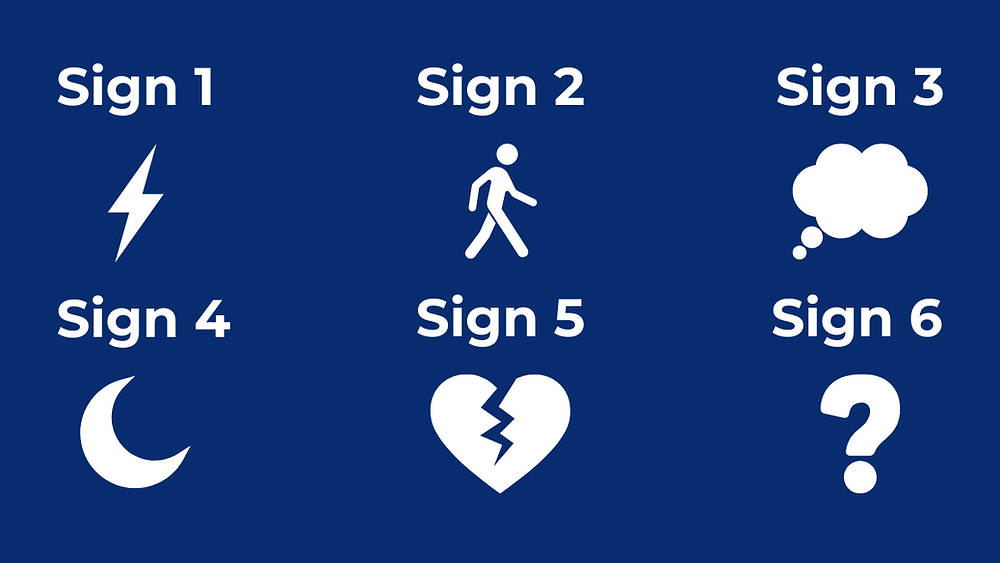
This guide walks you through six signs that what you’re feeling might actually be trauma and how to begin understanding what your nervous system’s been trying to tell you.
Sign 1: You React More Strongly Than the Situation Calls For
You might feel like your reactions don’t make sense, even to you.
You snap, cry, freeze, or shut down over things that seem small.
Your body braces like something awful is about to happen, even when you’re technically “safe.”
You overanalyze situations, expecting the worst.
People might tell you you’re “too sensitive” or “overreacting.”
But inside, you’re just trying to stay safe in a world that hasn’t always felt safe.
This isn’t weakness.
It’s your nervous system doing its best to protect you, even if it’s misfiring.
Stat: According to the American Psychological Association (2020), individuals with PTSD are nearly three times more likely to experience heightened physiological responses to stress, such as elevated heart rate or hypervigilance, even in non-threatening situations. This means your body might be reacting as if danger is present, even when it isn’t.
Sign 2: You Avoid Certain People, Places, or Memories
Avoidance is one of trauma’s most common symptoms.
You might find yourself dodging certain streets, skipping events, ignoring calls, or refusing to talk about certain parts of your past.
Sometimes it’s subtle, like always needing background noise to avoid silence.
Or zoning out when something reminds you of a time you’d rather forget.
Avoidance feels protective in the moment.
But over time, it limits your life.
It keeps the fear alive, instead of giving your brain the chance to learn: you survived.
One client told us they hadn’t driven past their high school in years, even though it was the fastest way home.
Another avoids certain songs because they take them right back to a place they’ve tried to forget.
Stat: According to the U.S. Department of Veterans Affairs' National Center for PTSD, around 80% of individuals diagnosed with PTSD report active avoidance of people, places, or thoughts that remind them of the trauma (2023). Avoidance can feel like safety, but it often delays healing.
Sign 3: You Feel Numb, Detached, or Like You’re Watching Your Life from the Outside
Trauma doesn’t always look like panic or flashbacks.
Sometimes, it looks like nothing at all.
You go through the motions, but feel emotionally flat.
Joy doesn’t hit like it used to.
Love feels distant.
Even laughter can feel out of reach.
You might feel like you’re living in a fog, watching life happen, but not in it.
This is dissociation.
And it’s not “laziness” or “just being tired.”
It’s a trauma response.
Therapist Insight: “Dissociation is your mind saying, ‘This is too much.’ It’s not a failure. It’s a sign you adapted to survive.” — Sarah Snow, MSW, LSW, TAC Dayton Office, Clinician
Stat: The Sidran Institute (2019) estimates that 90% of individuals with complex trauma histories report some form of dissociation. In plain terms, your brain may be trying to protect you by creating emotional distance from overwhelming experiences.
Sign 4: Your Sleep and Focus Are Disrupted, and Have Been for a While
Your nights feel like a battle, and mornings feel like a fog you can’t shake.
You can’t just “relax.”
You lie awake with racing thoughts.
Or wake up from nightmares, your heart pounding.
Your mind feels foggy during the day, and focusing feels like swimming upstream.
You may try to push through with caffeine, schedules, or distractions.
But your body isn’t cooperating.
When your nervous system is stuck in survival mode, it doesn’t prioritize rest.
It’s not your fault.
It’s your biology.
Stat: According to a 2020 report by the Sleep Foundation, more than 70% of people with PTSD experience sleep disruptions, including insomnia, nightmares, and restlessness, which can worsen daytime concentration and mood regulation.
Sign 5: You Struggle with Shame, Guilt, or Beliefs Like “I’m Broken” or “It Was My Fault”
Trauma often distorts how we see ourselves.
Maybe you carry deep shame about something you lived through, or how you coped.
You might blame yourself for things that were never your fault.
Or feel like you’re “too much” or “not enough,” no matter what anyone says.
Even when people tell you otherwise, the feeling lingers:
“There’s something wrong with me.”
But these beliefs aren’t the truth.
They’re trauma echoing inside your thoughts.
Therapist Insight: “One of the hardest things trauma survivors carry is the belief that they caused their pain. Therapy helps untangle that lie.” — Lisa Willis, LSW, TAC Indianapolis Office, Associate Clinician
Stat: A 2018 study in the Journal of Traumatic Stress found that 68% of trauma survivors experience long-term negative self-beliefs, including guilt and shame. These emotional patterns are often internalized coping mechanisms, not reflections of who you truly are.
Sign 6: You Know Something’s Off, Even If You Can’t Name It
It’s a weight you can’t name.
A whisper that something inside you still hurts.
Sometimes trauma doesn’t have a name or a headline.
It’s just a feeling that’s always been there.
A low hum of anxiety, sadness, or disconnect.
You look around and think, “I should be fine.”
But inside, something doesn’t add up.
You feel stuck.
Confused.
Tired of pretending.
And even if you can’t name what happened or why, your body knows.
Your story is valid, even if it’s blurry.
Your pain is real, even if you can’t explain it.
Stat: The Substance Abuse and Mental Health Services Administration (SAMHSA) reports that trauma survivors often wait an average of 6 to 8 years before seeking professional help (2022). This delay is common, and you are not behind.
You Don’t Have to Carry This Alone
If this guide resonated, the next step might feel both important and intimidating.
So here’s something simple:
Our team put together a gentle, step-by-step overview of how we treat trauma, so you can see what healing could actually look like with us.
No pressure. Just clarity and hope.
And if you're ready to take one small step today?
You can fill out a 30-second form to match with a therapist who gets it.
We’ll walk with you from there.
👉 Fill out our 30-second form to get started
DISCLAIMER: *This content is for informational purposes only and does not constitute medical advice, diagnosis, or treatment; always consult a licensed professional.*