
Why Your Emotions Feel So Intense: 5 Signs of a Personality Disorder

Some days it feels like your emotions are running the show.
One moment, you’re calm.
The next, you’re overwhelmed, angry, or deeply sad, and you don’t always know why.
Your relationships may feel like a constant push and pull.
Your sense of self feels shaky.
Maybe you’ve even tried different therapies, but nothing seems to stick.
If this resonates, you are not broken.
What you’re experiencing may have a name: a personality disorder.
While only a licensed professional can make that diagnosis, understanding the signs can be the first step toward clarity.
This guide walks through 5 signs that go beyond everyday struggles and what science says about why they happen.
Each sign is backed by research, and along the way, you’ll see therapist insights that reflect what we hear from clients every day in Cincinnati, Dayton, and Indianapolis.
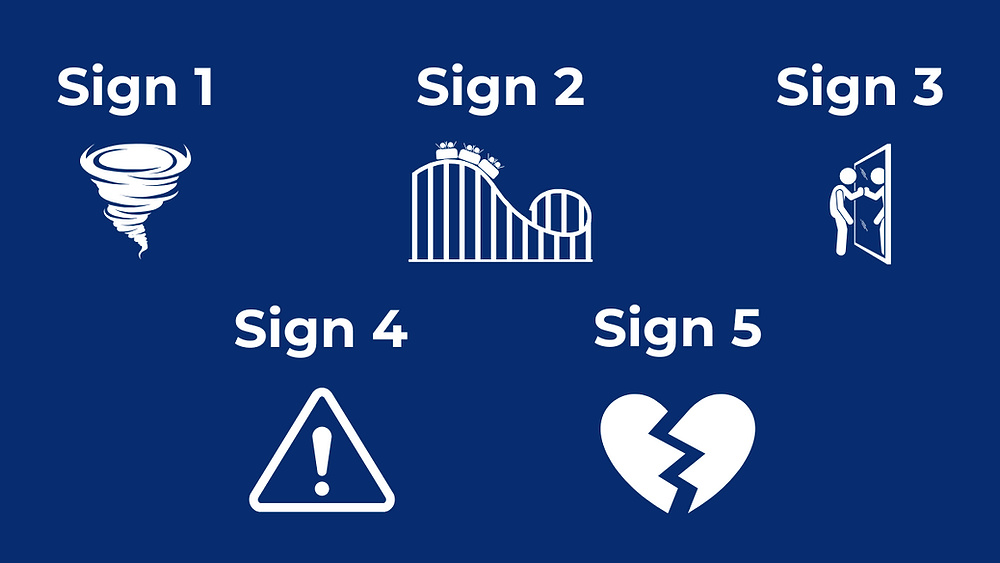
Sign 1: Intense Mood Swings That Don’t Add Up
Your emotions shift quickly and feel bigger than the situation calls for.
Anger, sadness, or anxiety can spike within minutes, then fade, then return again.
You might blame yourself, wondering if you’re “too sensitive” or “overreacting.”
But research shows this is a core feature of certain personality disorders, particularly Borderline Personality Disorder (BPD).
Stat: According to the National Institute of Mental Health (NIMH, 2024), BPD is marked by intense and highly variable moods, with episodes lasting from a few hours to a few days.
Sign 2: Rollercoaster Relationships
One moment you feel deeply connected to someone.
The next, you’re convinced they don’t care.
You may find yourself desperately fearing abandonment, then pulling away in anger or hurt.
This isn’t just conflict, it’s a relational pattern tied to how personality disorders affect the brain’s emotional and attachment systems.
Composite Story: Many people describe it like walking on a tightrope: either wanting to be closer than close, or feeling the urge to run away before they get hurt. There’s rarely an in-between.
If you’ve ever felt that tension, you are not alone — this push-and-pull is one of the most common patterns we see.
Stat: According to the National Institute of Mental Health (NIMH, 2024), a hallmark of BPD is a pattern of intense and unstable relationships with family, friends, and loved ones.
Sign 3: A Shaky Sense of Self
Maybe you struggle to answer the question, “Who am I?”
Your goals, values, or sense of identity seem to shift depending on who you’re with or what’s happening in your life.
At times, you may feel empty, like you’re not sure you really know yourself at all.
Stat: According to the National Institute of Mental Health (NIMH, 2024), identity disturbance is one of the official diagnostic criteria for BPD. People with personality disorders often report uncertainty about how they see themselves and may change goals or values frequently.
Sign 4: Impulsive or Risky Behaviors
You might find yourself acting quickly, sometimes recklessly, when emotions feel too strong.
This could look like overspending, substance use, unsafe sex, binge eating, or other self-destructive choices.
What often feels like a lack of willpower is usually an attempt to escape intense emotional pain.
Stat: According to the National Institute of Mental Health (NIMH, 2024), people with BPD may engage in impulsive and often dangerous behaviors such as spending sprees, unsafe sex, substance abuse, reckless driving, and binge eating.
Sign 5: Self-Harm or Thoughts of Suicide
This is one of the most painful realities of living with a personality disorder.
Many people cope with overwhelming emotions through self-harm, such as cutting or burning.
Others experience frequent thoughts of suicide.
These behaviors are not about manipulation, they are signals of unbearable emotional distress.
Stat: According to the National Library of Medicine (2019), up to 75% of people with BPD engage in self-harm, and suicide rates are significantly higher than in the general population.
If you’ve ever been in this place, know that help is available right now.
You can dial or text 988 for the Suicide & Crisis Lifeline for immediate support.
You Don’t Have to Carry This Alone
If you see yourself in these signs, it can feel overwhelming.
But here’s the truth: personality disorders are treatable.
With approaches like Dialectical Behavior Therapy (DBT), people learn skills to regulate emotions, build stable relationships, and find a more grounded sense of self.
At The Anxiety Center, serving clients in Cincinnati, Dayton, and Indianapolis, we’ve seen firsthand how recovery is possible.
It takes the right support, the right tools, and the belief that you are worth healing.
What feels overwhelming today can become manageable tomorrow. The first step is knowing you don’t have to carry it alone.
👉 [See How We Treat Personality Disorders →]
And if you’re ready to take one small step today?
You can fill out a 30-second form to match with a therapist who gets it.
We’ll walk with you from there.
👉 Fill out our [30-second form] to get started
DISCLAIMER: This content is for informational purposes only and does not constitute medical advice, diagnosis, or treatment; always consult a licensed professional.