
6 Most Common Concerns People Have Before Starting Group Therapy IOP for Anxiety, OCD, or Trauma

Starting an Intensive Outpatient Program for anxiety or OCD can feel overwhelming.
Many people come in with the same fears and questions.
Those concerns are completely valid.
Below are the most common concerns we hear from patients before starting IOP.
What if my anxiety or OCD looks different from everyone else’s?
This is one of the most common concerns we hear.
It is also one of the most misunderstood.
While the themes and triggers of anxiety and OCD can look different from person to person, the core fears underneath them are remarkably similar.
These core fears often include fear of rejection, fear of being stuck, fear of losing identity, and fear of losing control or safety.
At The Anxiety Center, we place a strong emphasis on normalizing these experiences.
There is truly nothing you could bring into the room that we have not seen or heard before.
Your fears belong here.
Your experience is understood.
What if I do not feel ready or motivated yet?
Feeling uncertain or unmotivated is not a sign that you should avoid treatment.
It is often part of the anxiety itself.
In real life, we almost never make major decisions feeling completely ready or certain
.Starting IOP follows that same principle.
Anxiety and OCD treatment is built on learning how to move forward despite uncertainty.
That includes acknowledging the discomfort you feel and choosing to take the next step anyway.
You do not have to feel ready to begin.
You only have to be willing to begin.
What if my anxiety gets worse before it gets better?
For many people, anxiety does increase at the beginning of treatment.
This happens because Exposure and Response Prevention is a core part of effective anxiety and OCD care.
ERP involves gradually facing feared situations or thoughts.
ERP also involves resisting compulsions and avoidance behaviors.
Over time, this process teaches your brain that anxiety does not control your choices.
The early increase in anxiety is temporary.
That short term discomfort is what creates long term stability and freedom.
Will I be forced into exposures I am not ready for?
No.
You will not.
Every patient works with their clinician to create a personalized exposure plan.
That plan moves from smaller manageable challenges toward larger ones as confidence builds.
You may not always feel ready.
You will never be asked to do anything unsafe or overwhelming.
You will never be asked to do anything your treatment team would not do themselves.
Will I lose my independence or become dependent on the program?
The goal of IOP is the opposite.
The goal is to strengthen your independence.
Treatment focuses on building real skills you practice both in and outside of the program.
Homework and between session practice prepare you to manage anxiety and OCD on your own after treatment ends.
IOP is not about dependence.
It is about learning how to live freely again.
Is IOP only group therapy or is there individualized support too?
While IOP is structured group therapy, your care does not stop there.
Many patients also receive individual therapy and medication management.
Some patients also explore advanced treatment options when appropriate.
Advanced options include Spravato, intravenous ketamine therapy, and Transcranial Magnetic Stimulation.
Your care team works together to build a treatment plan that fits your specific needs.
Starting Group Therapy at TAC: What Happens First (And Why It’s So Simple)
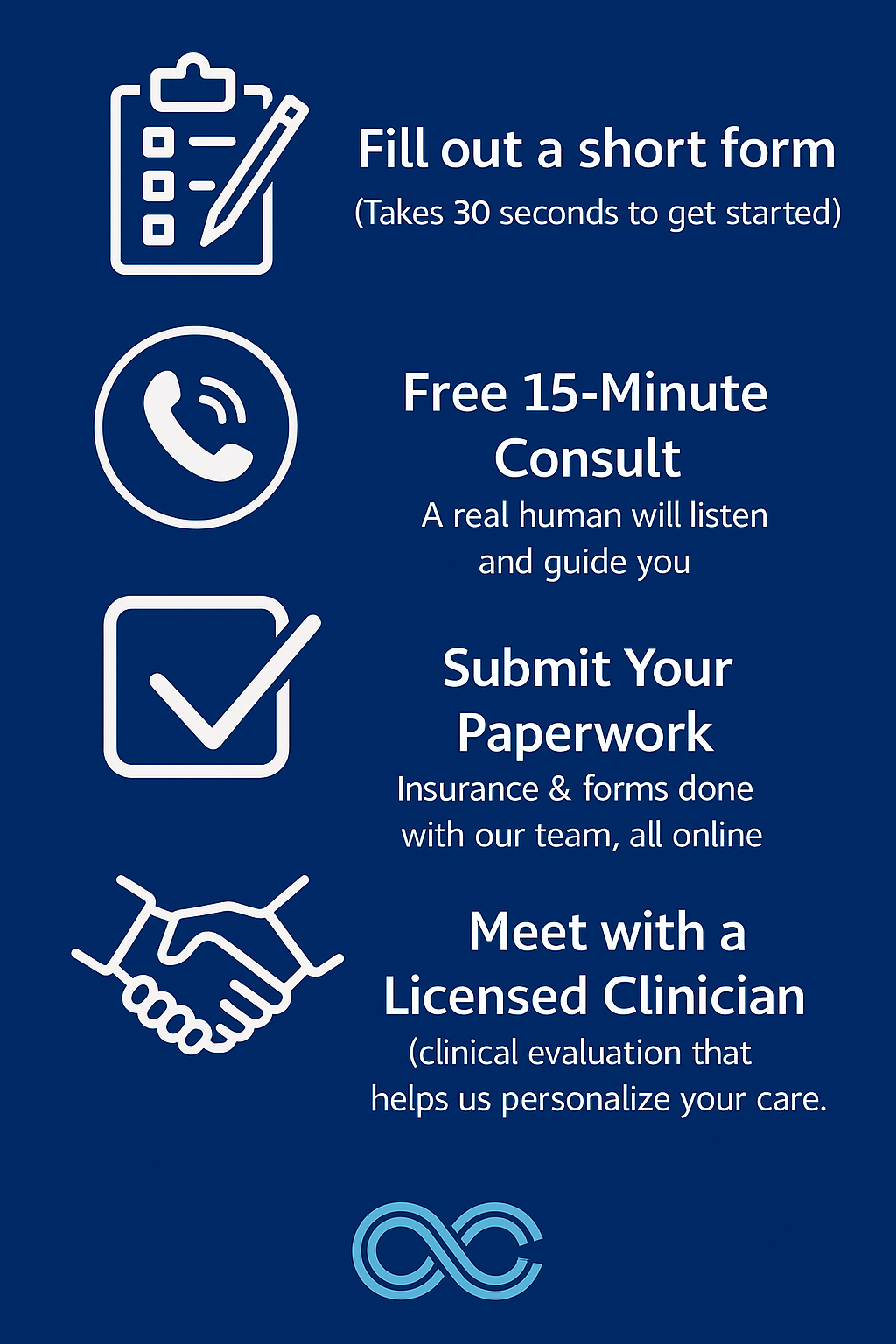
👉 Fill out our 30-second form to get started
We start with something simple.
Listening.
No pressure to explain everything.
No expectations of where you “should” be.
Just a safe space to say,
“I’m struggling. And I need help.”
You’re not alone.
And you’re not failing.
You’re already doing the most important thing: seeking support.
Let us walk with you the rest of the way.
DISCLAIMER: This content is for informational purposes only and does not constitute medical advice, diagnosis, or treatment; always consult a licensed professional.