
The 5 Signs It’s Time to Move From Weekly Therapy to Group Therapy IOP

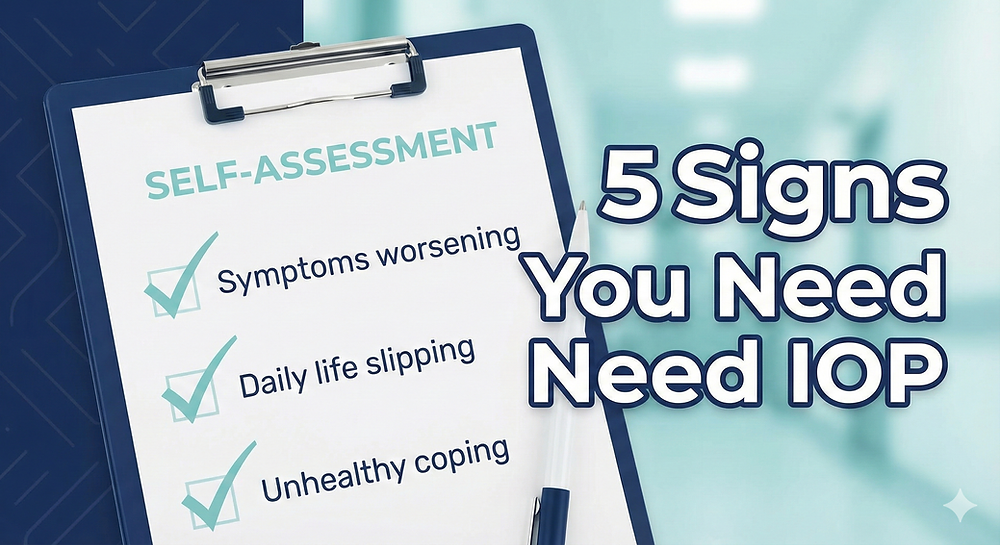
Weekly therapy helps a lot of people.
But when you’re showing up, doing the work, and still not feeling better, it can be confusing and discouraging.
The truth is simple.
Sometimes your symptoms need more support, more structure, and more repetition than one hour a week can provide.
That is where Group Therapy IOP comes in.
Why Weekly Therapy Sometimes Isn’t Enough
Weekly therapy is great for slow, steady progress.
But when symptoms start affecting how you live your life, you usually need something more structured.
Stat: About 1 out of 20 adults experiences serious mental illness that interferes with daily life. (Source: NIMH & SAMHSA, 2024)
Weekly therapy gives you skills, but IOP gives you the repetition and stability needed to actually apply those skills each week, during the sessions.

TAC Clinician Insight: "Weekly therapy builds awareness. But when life starts falling apart between sessions, it’s usually not that you’re failing, it’s that your support isn’t matching your symptoms. That’s where IOP makes the biggest difference." — Lisa Willis, LPCC, TAC Dayton Office
What Group Therapy IOP Actually Is
Group Therapy IOP is a structured step up from weekly therapy.
It provides greater accountability, more skill building, and more chances to practice emotional regulation in real time.
All Group Therapy IOP sessions at The Anxiety Center are held in our own clinical facilities in Cincinnati, Dayton, and Indianapolis, so you receive higher-level care in the same safe, familiar environment.
What this looks like:
4–6 people per group (all struggling with a similar condition)
Daily clinician-led skill-building designed around your needs
3–5 days a week of structured treatment
Virtual or in-person at our Cincinnati, Dayton, or Indianapolis clinics
Stat: SAMHSA reports that IOP can be just as effective as inpatient and residential programs for people who do not need 24-hour care. (Source: SAMHSA, 2024)
IOP works because it surrounds you with support multiple times per week, helping your brain break old patterns faster.

TAC Clinician Insight: "IOP works because you’re not healing alone, you’re practicing new skills in real time, with guidance and repetition. That’s how the brain learns to calm down and reset." — Michael Siman, MSW, TAC Cincinnati Office
Sign 1: Your Symptoms Are Getting Worse Between Sessions
If your emotions crash, spiral, or feel unmanageable before your next weekly session, that is a sign your support level does not match what you are going through.
Stat: About 3 out of every 20 people in the U.S. experience frequent mental distress, meaning poor mental health on 14 or more days each month. (Source: CDC, 2024)
When your nervous system is overwhelmed most days, one session a week cannot help you stabilize.
IOP gives you support throughout the week, not just once.

TAC Clinician Insight: "If every week feels like you’re barely holding things together until your session, that’s not a lack of effort, it’s a lack of support. IOP bridges the gap so you don’t have to white-knuckle your way through the week." — Taylor Sellers, LPCC, TAC Indianapolis Office
Sign 2: You’re Repeating the Same Patterns Without Progress
You understand the problem.
You talk about it.
You see where it comes from.
But the change is not happening.
This is not a lack of motivation.
It is your brain needing more repetition and coaching to break the cycle.
Stat: Up to 1 of 3 people with depression do not improve with standard outpatient treatment alone. (Source: APA, 2023)
IOP adds the structure needed to help your brain create new habits and emotional responses faster.

TAC Clinician Insight: "Insight alone doesn’t create change. Repetition does. IOP gives people the reps they need to finally break patterns they’ve been stuck in for years." — Sarah Snow, LISW-S, TAC Dayton Office
Sign 3: Daily Functioning Is Slipping
Mental health affects everything, not just how you feel emotionally.
When work, school, or relationships start to fall apart, it is usually a sign that symptoms are going untreated between weekly sessions.
Stat: About 1 out of every 18 adults experienced a major depressive episode with severe impairment in the past year, meaning it significantly disrupted work, school, or daily functioning. (Source: NIMH, 2022)
IOP helps with this by focusing heavily on real-life functioning, not just emotional insight.
TAC Clinician Insight: "When functioning starts to fall apart, school, work, hygiene, sleep, it’s not a sign of failure. It’s a sign your nervous system needs more support than weekly therapy can offer." — Jason Cox, LPCC-S, TAC Cincinnati Office
Sign 4: You’re Using Unhealthy Coping to Get Through the Week
When support does not match how overwhelmed you feel, the body naturally reaches for something that brings temporary relief.
This could look like shutting down, avoiding responsibilities, overworking, overeating, drinking, or numbing.
Stat: About 2 out of every 25 people have both a mental illness and a substance use disorder, meaning it’s more common than most people realize and never a sign of personal failure. (Source: SAMHSA, 2024)
These behaviors are not “bad habits.”
They are signs your nervous system is overloaded, and IOP provides tools to help you regulate again.
TAC Clinician Insight: "Unhealthy coping isn’t a moral issue. It’s your nervous system trying to survive with too little support. IOP gives you healthier tools that work in the moment." — Lisa Willis, LISW, TAC Dayton Office
Sign 5: Your Therapist Recommends More Support
Therapists do not say this casually.
They recommend IOP when they see that you need more structure, support, or frequency to improve.
This is not because you are “worse,” but because you are ready for a higher level of care.
Stat: A national APA survey found that about 16 out of every 25 psychologists report increasing severity in client symptoms. (Source: APA, 2022)
When your therapist recommends IOP, it means they believe you can make faster, deeper progress with more consistent support.
TAC Clinician Insight: "When I recommend IOP, it’s because I know the person is ready for deeper healing, not because they ‘failed’ therapy. It’s one of the most hopeful moments in treatment." — Michael Siman, MSW, TAC Cincinnati Office
Quick Self-Check: Are You Delaying the Care You Need?
A lot of people push through symptoms for years before reaching out for help.
Stat: On average, people wait about 11 years between when symptoms begin and when they receive treatment. (Source: NAMI, 2024)
If you are noticing these signs in yourself, you are not behind. You are recognizing it earlier than most.
Client Review: “I am so impressed by The Anxiety Center. As someone who has been hospitalized five times, done IOPs with the Cleveland Clinic, and different types of private therapy, The Anxiety Center has totally changed and helped me in ways nothing else has. Michael Siman and Sarah Snow have helped me tremendously as I try to work through my severe OCD and anxiety. I highly recommend!”— Google Review – Cincinnati
If This Sounds Familiar
Needing more support does not mean something is wrong with you.
It means you are ready for a level of care that finally matches what you have been carrying on your own.
And almost everyone who completes IOP says:
“I wish I had done this sooner.”