
What to Expect from Our Adolescent Intensive Outpatient Program

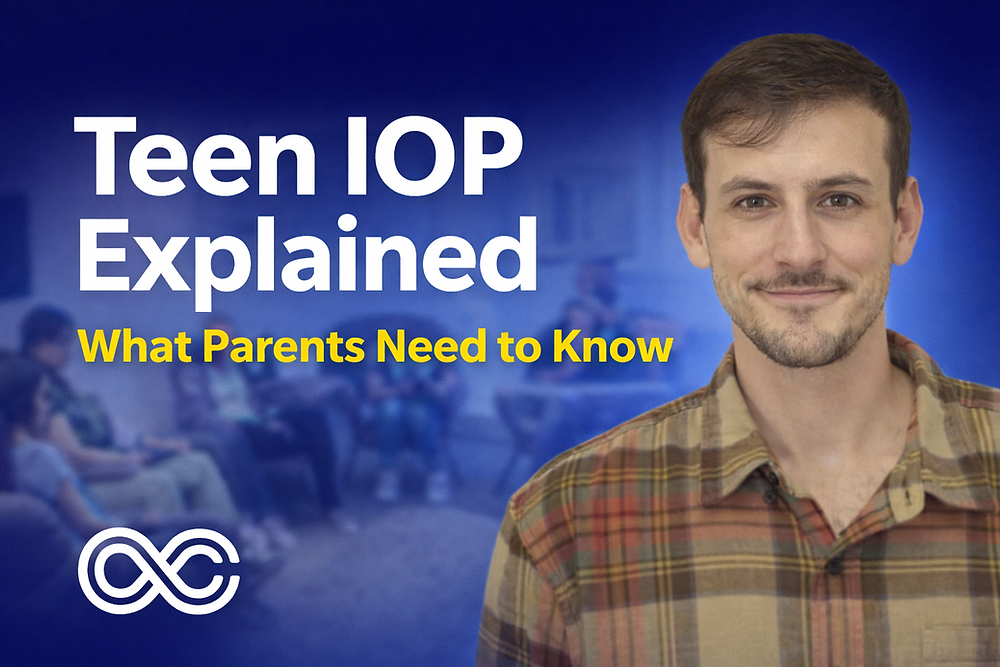
Welcome to The Anxiety Center’s Adolescent Intensive Outpatient Program.
This program is designed to provide teens and their families with high quality evidence based mental health care in a supportive outpatient setting.
Our adolescent IOP serves teens between the ages of 14 and 17.
The program is rooted in evidence based treatments that help individuals manage anxiety regulate emotions and build effective coping skills.
The Adolescent IOP is a group based program that operates on a hybrid model.
Participants may attend either in person or virtually.
Groups meet Monday through Friday from 4:00 PM to 6:30 PM.
This schedule allows teens to attend school during the day while receiving care.
Please review the information below carefully to understand the program structure and expectations.
What We Teach
The primary therapeutic modalities used in Adolescent IOP are Dialectical Behavioral Therapy and Exposure and Response Prevention.
Core Treatment Approaches
Our program uses Dialectical Behavioral Therapy and Exposure and Response Prevention.
Detailed explanations of these therapies are available through the provided links.
Exposure and Response Prevention
ERP is an evidence based treatment for anxiety and related disorders.
Participants gradually confront thoughts images objects or situations that trigger anxiety.
Exposure practice is paired with response prevention.
Response prevention means resisting compulsive or safety seeking behaviors after anxiety is triggered.
Over time this process reduces anxiety and increases confidence.
Daily Group Structure
Each Adolescent IOP session follows a consistent and predictable structure.
Sessions begin with a brief group check in.
Sessions include a mindfulness activity.
Sessions include a DBT skills lesson.
Sessions include exposure practice with therapist support.
This structure allows teens to learn skills practice them in real time and receive coaching and encouragement from clinicians and peers.
First Day Expectations
On the first day teens and families meet the IOP therapist or therapists.
Group rules and expectations are reviewed.
Teens and families have time to ask questions.
Group programming officially begins at 4:00 PM.
Families are not required to remain on site during IOP hours.
Teens attending virtually must join from a private quiet space that meets participation guidelines.
During early sessions new participants are introduced to the group.
Teens begin working individually with the therapist to develop a personalized exposure hierarchy.
Group Expectations
Participants are expected to follow all guidelines to support a safe effective and respectful environment.
Attendance and Participation
Participants should attend sessions on time.
Participants should remain for the full group whenever possible.
Participants should call or email if they will be late or absent.
Consistent attendance is important because skills build over time.
Participants should practice DBT skills between sessions.
Confidentiality and Boundaries
All names and identifying information shared in group must remain confidential.
Participants should not form private or undisclosed relationships with other group members outside of IOP.
Participants should avoid partnering in risky behaviors illegal activity or substance use.
Participants should respect personal boundaries and the structure of the group.
Respect and Support
Participants should treat all group members with respect and compassion.
Participants should validate one another’s experiences.
Judgment should be avoided.
Feedback should be helpful noncritical and offered only when invited.
Participants should be open to receiving support and feedback.
Focus and Conduct
Participants should remain present and engaged during sessions.
Phone use and distractions should be avoided during group time.
Participants should not attend sessions under the influence of drugs or alcohol.
Participants should avoid sharing triggering details about past or current problem behaviors.
Limiting interaction with other IOP participants outside of supervised group time is strongly recommended.
Outside contact can complicate group dynamics and treatment progress.
Virtual Participation Rules
Additional rules apply to ensure privacy confidentiality and safety.
The privacy of all participants is extremely important.
No one may attend group in the presence of another person who could see or hear the session.
This includes family members friends or others in the same room.
Headphones or earbuds are strongly encouraged.
Written notes must exclude names identifying details and personal information of others.
Notes should focus on skills concepts and personal reflections.
Environment and Technical Setup
Participants must choose a private quiet space free from distractions.
Facilitators may request participants to turn on cameras to check the environment.
This supports accountability engagement and group connection.
Participants should log in on time.
Audio and video should be tested before each session. Sessions should not be attended while driving in transit or in any public space.
Conduct and Professionalism in Virtual Space
Participants should dress as they would for in person sessions.
Participants should remain seated and focused during group.
Multitasking lying in bed and leaving the camera unattended should be avoided.
Backgrounds should be neutral and non distracting.
Virtual backgrounds are allowed if professional and appropriate.
Recording photographing or screen capturing any part of the session is prohibited.
Failure to follow rules may result in removal from virtual sessions.
Failure to follow rules may affect continued participation in the IOP.
Exposure Hierarchy Development
An exposure hierarchy is a structured list of anxiety triggers ranked from lower to higher levels.
Teens work with therapists to identify triggers.
Teens assign a subjective anxiety rating to each trigger.
Example exposures include saying hi to a stranger rated six out of ten.
Another example is introducing yourself to a stranger rated seven out of ten.
Another example is talking to a stranger for five minutes rated nine out of ten.
The hierarchy guides exposure practice throughout the program.
The hierarchy helps teens build confidence gradually and safely.
Family Involvement
Families play an important role in treatment.
Caregivers may support skill practice and exposure work outside of group hours.
The clinical team may communicate with caregivers as appropriate.
Communication supports progress and consistency across environments.
Commitment to Treatment
Participation requires consistent attendance engagement and willingness to practice skills.
Skills should be practiced both in and outside of group.
The program is most effective when teens and families commit to the process.
The process may feel challenging at times.
We appreciate the trust families place in The Anxiety Center.
We look forward to supporting your teen throughout their treatment journey.
Contact The Anxiety Center to schedule a consultation.