
Ketamine vs Spravato for Anxiety and Depression: A Complete Treatment Guide

Ketamine and Spravato are two advanced treatments that are increasingly used to help people struggling with anxiety and depression.
While these treatments are related, they work slightly differently and follow different treatment timelines.
These treatments are often considered when traditional approaches have not provided enough relief.
This guide explains how ketamine and Spravato work, how long treatment typically takes, safety considerations, and what patients can expect.
How Ketamine and Spravato Work in the Brain
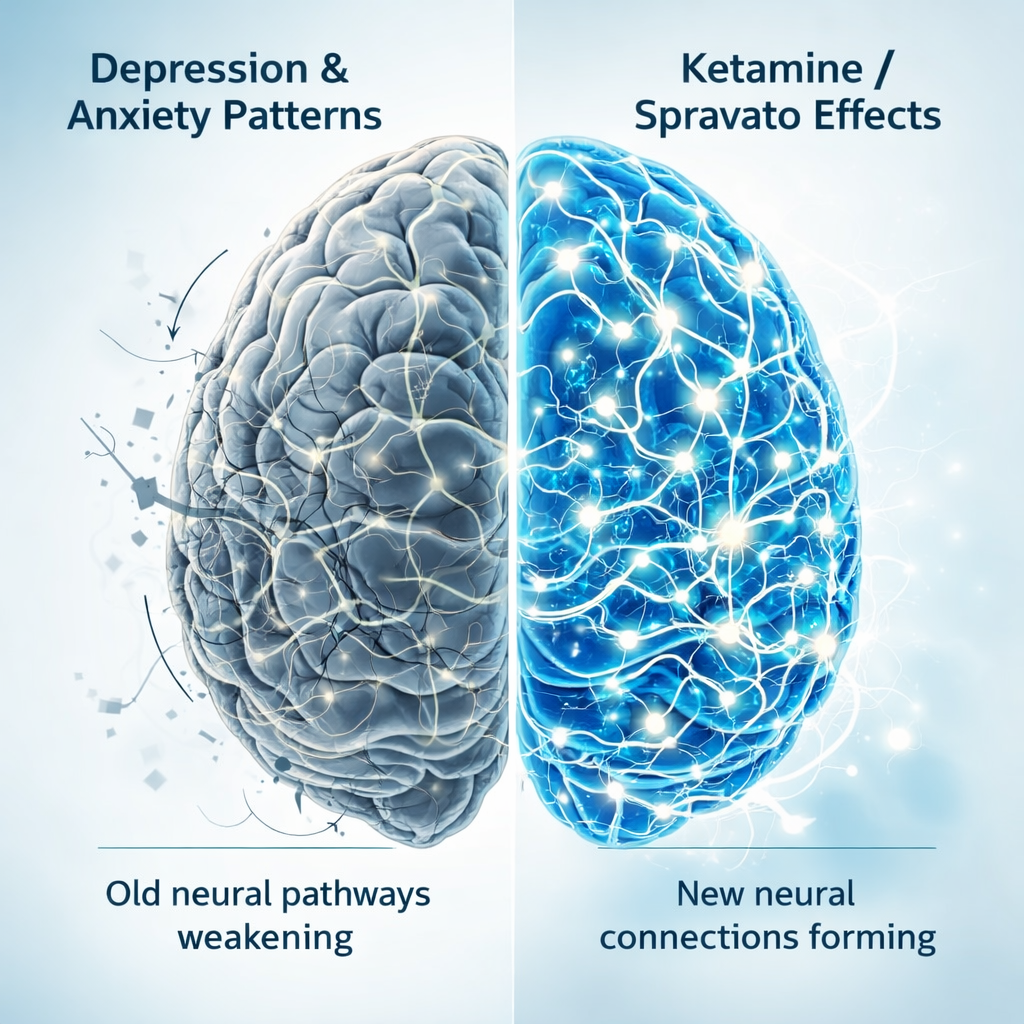
Ketamine works by activating glutamate receptors in the brain.
This process helps the brain prune out older neural pathways that are commonly associated with depression and anxiety disorders.
When those pathways are weakened, the brain can begin forming new connections that are not tied to those same depressive or anxious patterns.
Treatment Timeline: Ketamine vs Spravato
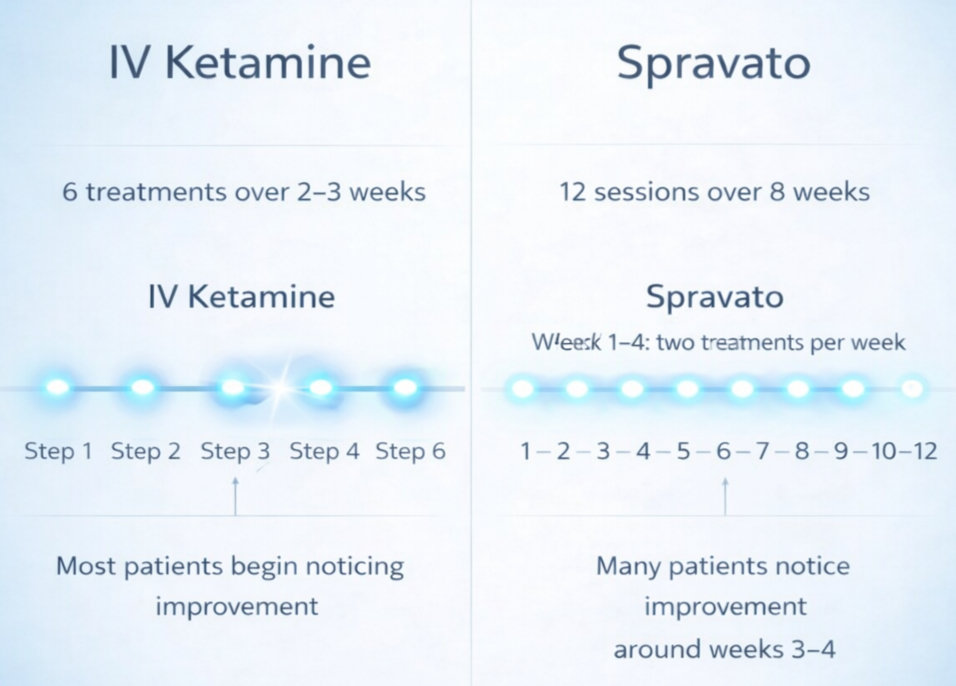
For IV ketamine, the typical treatment course consists of six infusions spread across two to three weeks.
For Spravato treatment, the schedule is more structured due to federal monitoring requirements.
Spravato treatment includes 12 sessions total.
Patients receive two treatments per week for the first four weeks.
This equals eight sessions in the first month.
Patients then receive one treatment per week for the following four weeks.
Results can vary between individuals.
Some patients report improvement after the first IV ketamine treatment.
Other patients may not notice meaningful changes until the final infusion.
Most patients begin noticing symptom improvement around the third or fourth treatment.
With Spravato, improvement typically appears slightly later.
Many patients notice changes around weeks three to four.
This usually occurs after approximately six to eight sessions.
The difference is largely due to the longer treatment timeline.
Safety Considerations for Ketamine and Spravato
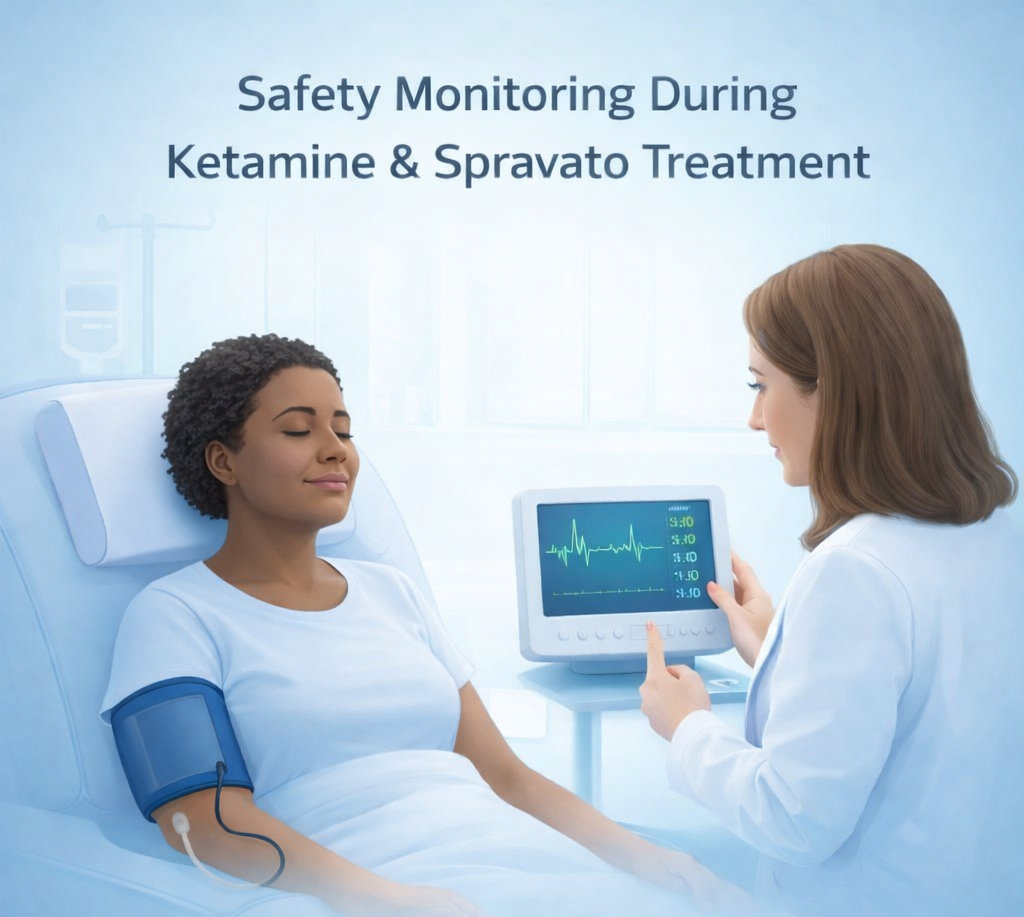
One of the most important safety considerations with ketamine is blood pressure.
Ketamine can temporarily increase blood pressure.
This is why patients receiving IV ketamine have their vital signs monitored closely throughout treatment.
Blood pressure and heart rate are typically checked every five minutes during an infusion.
For Spravato, monitoring occurs before treatment.
Monitoring also occurs about 40 minutes after the medication is administered.
A final set of vitals is checked at the end of the session.
Mild increases in blood pressure are relatively common.
Significant elevations are less frequent.
If necessary, clinicians can manage blood pressure with medication.
Another important consideration involves patients with a history of manic episodes.
Both ketamine and Spravato have the potential to trigger mania in susceptible individuals.
Clinicians monitor carefully for this possibility throughout treatment.
How Ketamine and Spravato Work With Therapy and Medication
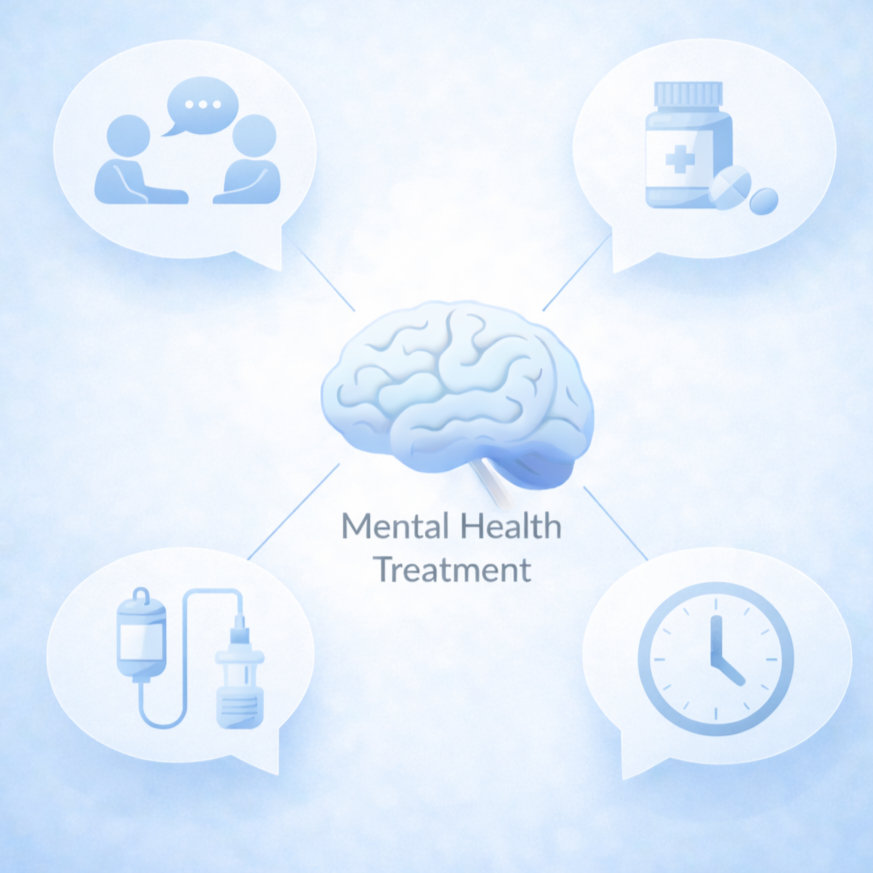
Patients are generally encouraged to continue their existing treatment plans while undergoing ketamine or Spravato treatment.
Some individuals may eventually be able to reduce their psychiatric medications.
Occasionally some patients may come off medication entirely.
This depends on the individual treatment response.
Therapy remains an important component of care.
Approaches such as Cognitive Behavioral Therapy (CBT) and other forms of therapy are strongly encouraged.
Processing experiences that occur during treatment can help improve overall effectiveness.
Therapy also supports long‑term mental health improvement.
What to Expect During a Ketamine or Spravato Treatment Session
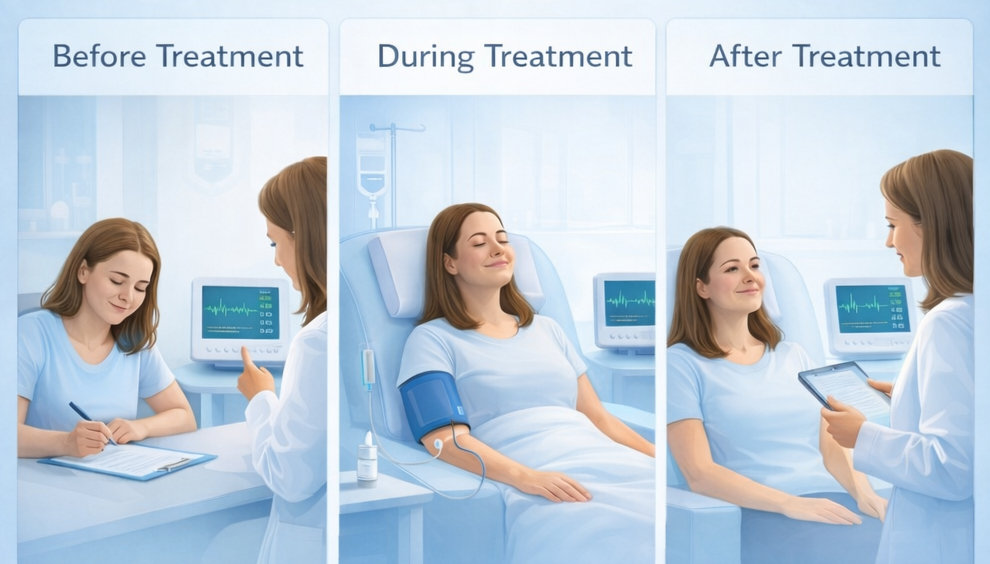
The experience is slightly different for ketamine and Spravato.
However, the overall structure of treatment sessions is similar.
Before Treatment
Patients complete a small set of forms at each visit.
These typically include a depression rating scale and an anxiety rating scale.
Patients also complete a driver confirmation form.
Baseline vital signs are taken before treatment begins.
For IV ketamine, an IV line is placed before starting the infusion.
Clinicians also review dosing with the patient.
During Treatment
Many patients experience dissociative effects during ketamine treatment.
This can feel like being slightly outside of one's body.
Some patients describe a floating sensation.
Others describe feeling disconnected from their environment.
Some patients compare the sensation to anesthesia.
They may feel relaxed, spacey, or mentally distant.
Because ketamine is an anesthetic medication, these sensations are expected.
For many patients the experience is actually pleasant.
Some individuals report that treatment allows them to process thoughts or emotions from a new perspective.
The infusion itself typically lasts about 40 minutes.
The effects usually begin about five to ten minutes after the infusion starts.
For Spravato, effects typically begin within about five minutes of the first nasal spray.
Spravato sessions last about two hours in total.
This allows clinicians to monitor patients while the medication wears off.
After Treatment
Before leaving, patients receive a final set of vital sign checks.
Two of the most common side effects seen with both treatments are nausea and dizziness.
Clinicians can provide medication to help manage these symptoms if they occur.
Benefits Patients Often Report From Ketamine and Spravato
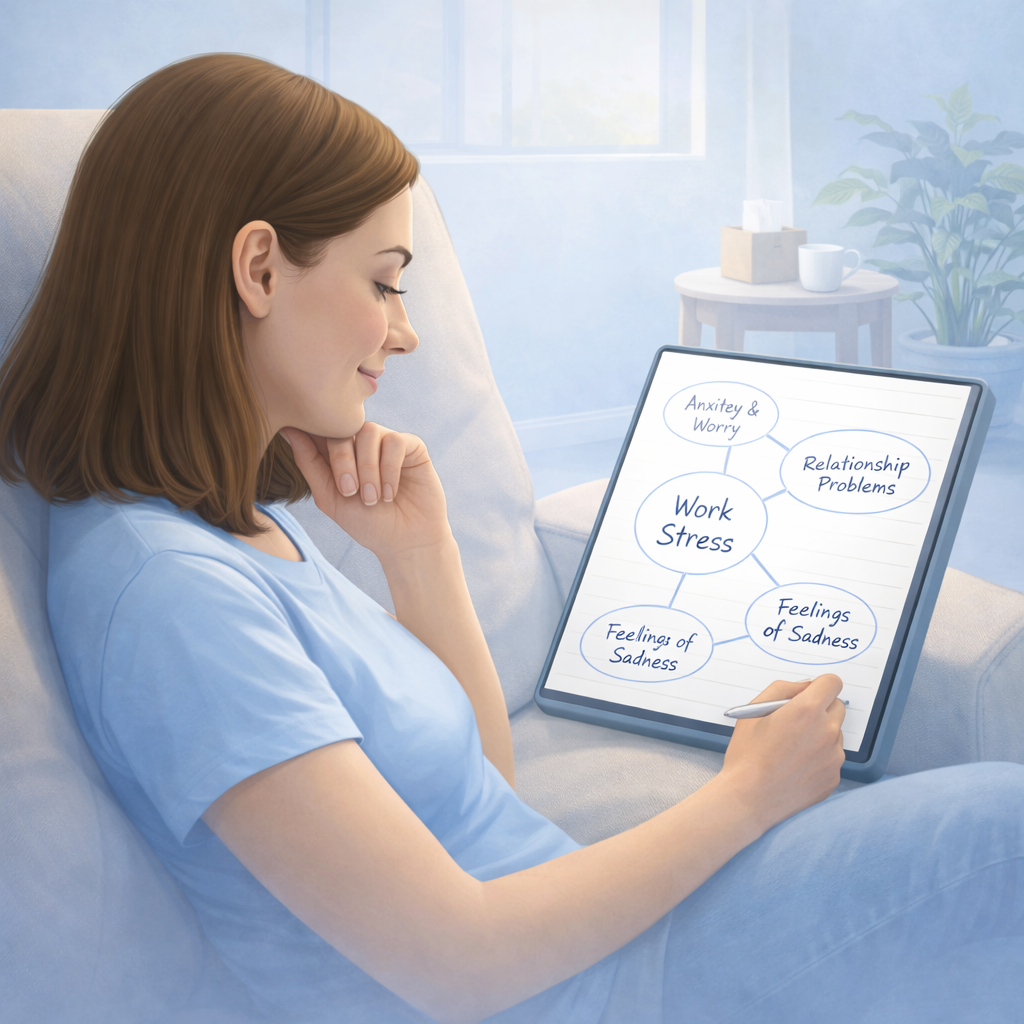
Many patients report that one of the most valuable aspects of treatment is the ability to view their thoughts and problems from a more detached perspective.
This distance can reduce some of the emotional intensity connected to difficult experiences.
Patients also commonly report gaining new insight into personal challenges.
Some individuals feel they are temporarily stepping outside their usual mental patterns.
This can allow them to see problems from a new angle.
For individuals who continue with booster treatments, many look forward to their sessions.
This is often due to the long‑term symptom relief they experience afterward.
Frequently Asked Questions
Is ketamine or Spravato better for depression?
Both treatments can be effective for depression.
This is especially true for people experiencing treatment‑resistant symptoms.
The best option depends on a patient's medical history, symptom severity, and treatment goals.
Can ketamine help anxiety disorders?
Yes.
Ketamine has shown promise for treating certain anxiety disorders.
This is particularly true when symptoms have not responded well to traditional treatments.
How long do ketamine treatment results last?
Many patients experience improvement after the initial treatment series.
Some individuals choose booster sessions to maintain long‑term symptom relief.
How quickly does Spravato start working?
Some patients notice improvement within the first few weeks of treatment.
Full results may take several sessions.
Next Steps
If you are struggling with anxiety or depression and want to learn more about advanced treatment options like ketamine or Spravato, you can schedule a free consultation.
The Anxiety Center provides care in: