

What to Expect From Therapy (And What Actually Helps Anxiety at Home)


If you’ve never been to therapy before, it’s normal to feel unsure about what it will actually be like.
Many people imagine therapy will immediately solve their problems or give them all the answers.
In reality, therapy is usually a gradual process focused on building understanding, trust, and practical skills over time.
The good news is that there are also simple things you can do at home that help manage anxiety while you work through that process.
If you want to understand the different conditions that fall under anxiety, you can explore our overview of anxiety disorders.
A Simple Strategy for When Anxiety Feels Overwhelming

One of the most helpful things you can do when anxiety starts building is focus completely on the task you are doing in the moment.
This idea is often called mindfulness, but it does not have to involve meditation or breathing exercises.
It simply means giving your full attention to whatever you are doing right now.
That could be doing homework, cooking dinner, watching a show, or even playing a video game.
When you give one activity your full attention, there is often less mental space for anxious thoughts.
Many anxious thoughts come from worrying about things that are not happening right now.
Focusing on the present moment helps bring your mind back to what is actually happening around you.
Evidence: “Mindfulness‑based therapy has been associated with significant reductions in anxiety symptoms across multiple clinical populations.” Source: JCCP, 2010
What the First Few Therapy Sessions Are Actually Like

Many people expect therapy to immediately provide answers or solutions.
In reality, the first few sessions are usually about getting comfortable with your therapist.
You are talking to someone you just met about personal struggles, so it is normal if that feels difficult at first.
Early sessions often focus on understanding what you are experiencing and building trust with your therapist during one-on-one therapy.
As that relationship develops, therapy can begin to explore the deeper patterns behind anxiety.
Evidence: “The therapeutic alliance is one of the most robust predictors of treatment outcome across psychotherapy approaches.” Source: Psychotherapy, 2018
Two Mindsets That Can Make Therapy Harder at First
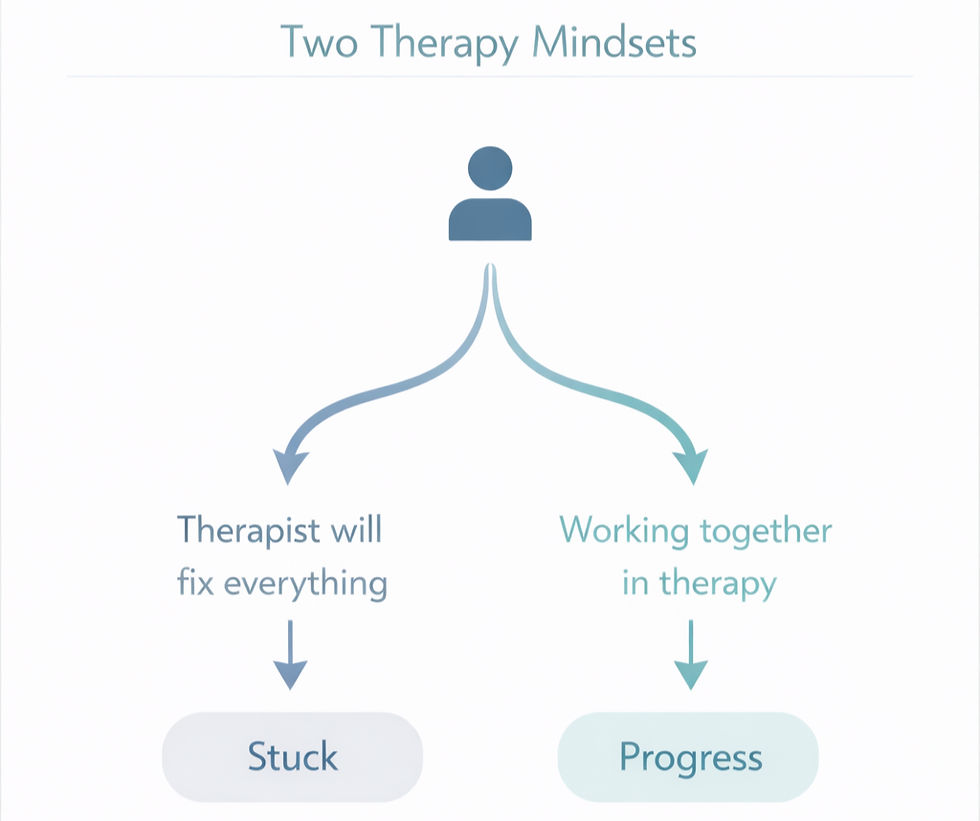
About half of people start therapy with expectations that can make progress harder in the beginning.
Some people come in feeling like they do not want to be there at all.
This often happens when someone feels pushed into therapy by a parent, partner, or family member.
Other people expect the therapist to completely solve their problems for them.
Therapy works best when it is a partnership between the therapist and the person receiving help.
The therapist provides guidance and tools, but real progress often comes from applying those tools outside of sessions.
For people struggling with intrusive thoughts or compulsions, specialized treatment like OCD and OCSD therapy may also be part of the process.
Evidence: “Positive treatment expectations and active engagement are associated with better psychotherapy outcomes.” Source: J Clin Psychol, 2011
Why Consistency in Therapy Matters

Therapy is usually most effective when someone commits to the process for a period of time.
Many therapists recommend approaching therapy with the mindset of committing to multiple sessions before deciding if it is helping.
Some people also benefit from more structured programs like an Intensive Outpatient Program (IOP) that provides multiple therapy sessions each week.
By that point, trust between the therapist and client usually has time to develop.
You also begin to build a clearer understanding of the patterns behind your anxiety.
Many struggles develop over years, so they often take time and consistency to work through.
Evidence: “Greater adherence to psychotherapy treatment is associated with significantly improved clinical outcomes.” Source: JCCP, 2012
What If Therapy Does Not Seem to Be Working
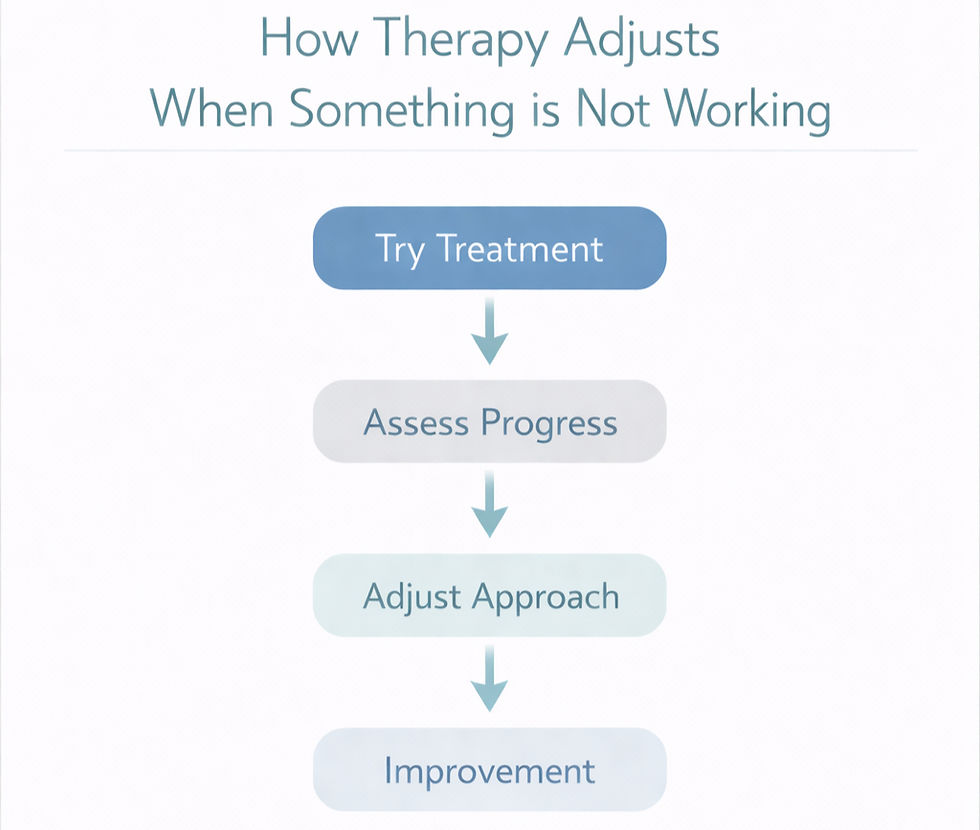
Sometimes people fully commit to therapy, follow the recommendations, and still feel like progress is slow.
When that happens, it does not mean the person failed.
It may simply mean that a different treatment approach is needed.
There are many types of therapy, and different people respond differently to each method.
A good therapist will work with you to adjust the approach so it better fits your needs.
Evidence: “Different patients respond differently to different psychotherapy approaches, and treatment matching can improve outcomes.” Source: Psychotherapy, 2011
Why Trust and Safety Matter in Therapy

Opening up about anxiety can be difficult.
That is why creating a sense of safety and trust is such an important part of therapy.
Therapists work to create an environment where people can talk honestly without feeling judged.
When someone feels safe sharing their experiences, it becomes much easier to address the issues causing anxiety.
Evidence: “The therapeutic alliance accounts for a meaningful portion of psychotherapy outcome variance.” Source: Psychotherapy, 2011
Taking the First Step Toward Feeling Better
Starting therapy can feel intimidating, especially if you have never done it before.
Many people find that once they begin, they gain tools that help them better understand and manage their anxiety.
Over time, those tools can make stressful situations feel more manageable.
Evidence: “Cognitive behavioral therapy produces large effect sizes in the treatment of anxiety disorders.” Source: Cogn Ther Res, 2012
At The Anxiety Center, our clinicians work with children, teens, and adults to help them move from surviving to thriving.
We also provide educational resources for families through Caregiver University.
If anxiety is interfering with your daily life, speaking with a professional may be the first step toward lasting change.
Our clinics serve clients in Cincinnati, Indianapolis, and Dayton.
You can schedule a free consultation to learn more about your options and what treatment could look like for you.

